Moving more manufactured cargo on rail does not have to be at the cost of the bulk cargo sector as there is more than enough room for both.
According to Professor Jan Havenga of the logistics department at the University of Stellenbosch, railway operators in Africa, while focusing on bulk cargoes for growth, need to also be looking at the manufacturing sector for business.
“The railway is highly skilled in bulk cargo movement,” he said. “South Africa, for instance, needs the forex generated by the exports of its bulk cargo commodities and it is a lucrative business for its railway. It won’t be in 30 years' time though. The railways need to invest in different products and markets now and that is where top management attention should be.”
He said moving downstream toward manufactured commodities did not mean taking the focus away from the bulk sector.
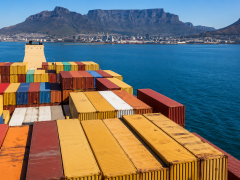
“Railways should continue with their performance in bulk, but product development and management attention should move downstream,” he said. “It is not one or the other. Installed technology for bulk and the capacity for it is great. “But long-distance manufactured commodities, including fast moving consumer goods (FMCG), should be containerised and ought to be intermodal.”
According to Havenga there is much to be gained by containerising pallet-friendly freight, such as manufactured or processed food and FMCG. “We don’t do it because we don’t have installed domestic intermodal solutions.
The container adds 4 tons to the weight, but if it enables combined road and rail movements it is worth it,” he said. Asked about the cost of logistics in Africa, Havenga said the most important solution to the poor logistics cost to GDP ratio was not necessarily the lowering of logistics costs (or efficiency improvements), but the growing of the GDP.