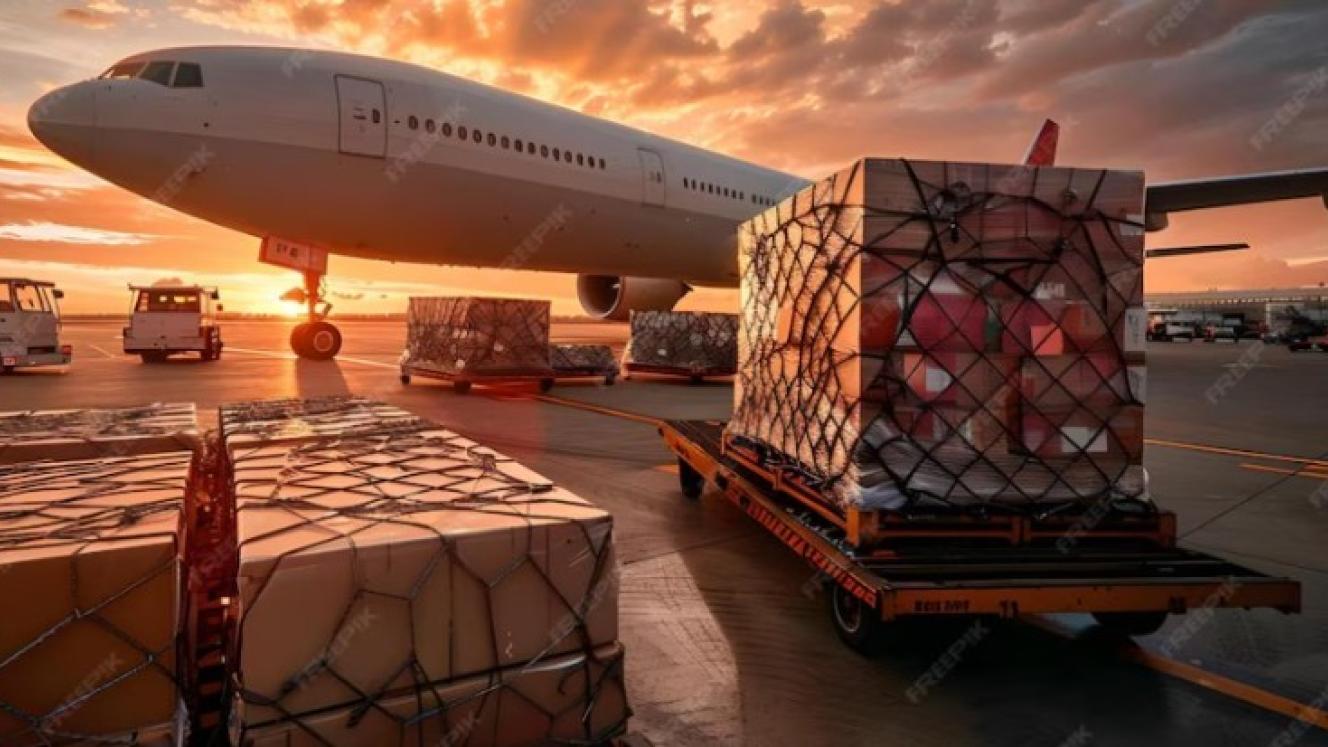
Airfreight played a pivotal role in bolstering global trade and economic growth in 2025, cushioning businesses against severe trade policy uncertainty, according to the International Air Transport Association.
An Iata report released on Tuesday highlights air cargo’s contribution to sustaining global trade growth of 2.4% – exceeding initial World Trade Organization forecasts – and supporting a 3.2% expansion in global GDP, despite significant policy headwinds.
“Air cargo is a structural component of global economic resilience,” said Julia Seiermann, Iata’s head of industry analysis.
“In 2025, it helped businesses absorb tariff shocks, enabled rapid trade restructuring, and supported the expansion of artificial intelligence investment, helping sustain trade and economic growth in a challenging year.”
A key factor was the frontloading of imports to pre-empt rising tariffs. In the first quarter of 2025, US imports surged by $193 billion year-on-year, a 26% increase, with the value of air-transported imports rising 81% to $157 billion – accounting for 82% of the overall Q1 rise.
Average applied US tariff rates climbed to around 17% – the highest since the 1930s – prompting companies to accelerate shipments by air to avoid impending duties.
Beyond frontloading, air cargo facilitated supply chain restructuring as importers shifted sourcing from tariff-exposed partners and exporters, redirected to alternative markets, particularly Europe.
During April-December 2025, air cargo benefited disproportionately from expanding trade lanes.
For the US, imports on expanding lanes rose by $213 billion of which $174 billion (82%) moved by air. On contracting lanes, imports fell by $257 billion, with only $77 billion (30%) typically air cargo. In Europe, air cargo captured 48% of gains on expanding lanes but just 3% of losses on contracting ones.
Seiermann highlighted air cargo’s strength in enabling the swift movement of high-value, time-sensitive goods in response to policy shocks.
Air cargo also powered the AI investment boom by delivering high-value, time-sensitive equipment such as servers, data storage units and memory chips.
In 2025, more than two-thirds of the value of AI-related trade was carried by air, with consignments of AI-related goods growing 20% year-on-year. These goods represented 53.5% of the total value of air-transported trade, despite comprising only 7% of its volume – underscoring their high-value density.
“The rapid increase in demand for AI-related goods in 2025 was met thanks to air cargo, allowing investment to translate into economic activity rather than being constrained by logistics,” said Seiermann.
“As economies increasingly and strategically rely on high-value technology goods, air cargo will continue to play a critical role in ensuring their timely delivery.”


