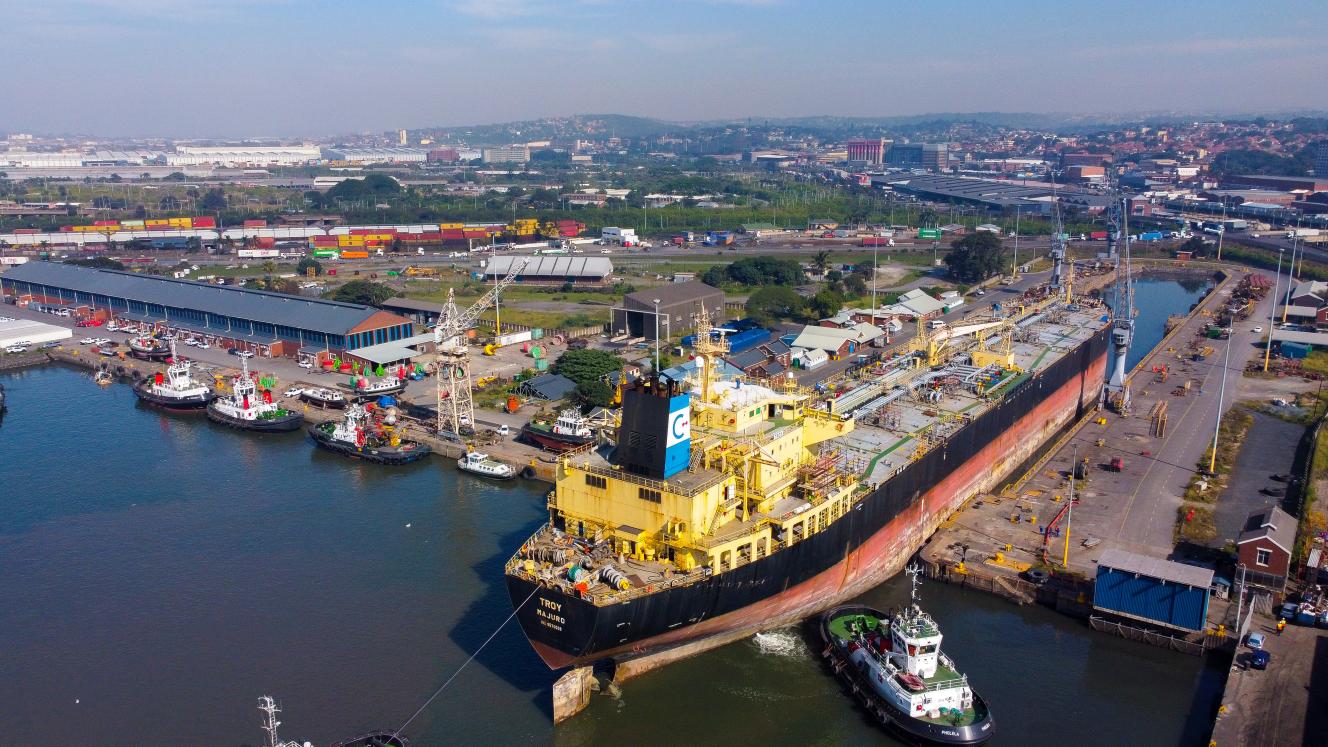
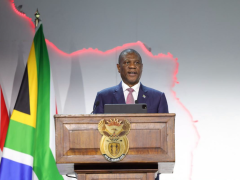
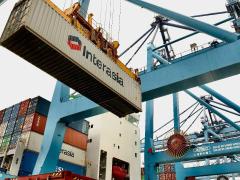
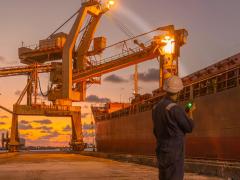
There have been serious congestion delays over the past week at Pier 1 in the Port of Durban, with trucks backing up some distance along the only access, Bayhead Road. As a result Transnet Port Terminals (TPT) declared force majeure at the container terminal Pier 1 following illegal industrial action in the form of a go-slow by employees, according to a notification from DCT terminal executive manager Hector Danisa. “The situation is that the illegal industrial action has affected productivity and led to delays and backlog in the movement of cargo through the terminal,” according to the notification. “Unfortunately this disturbance and its effects are beyond the control of TPT which has no option but to invoke the provisions of the force majeure clause in terms of TPT’s commercial agreements.” But, when TPT declared this force majeure (FM), a number of voices in the private sector freight industry questioned whether they actually had the right to deny claims from contracted clients because of strike action by their own work force. Two legal contacts of FTW, Quintus van der Merwe of Shepstone & Wylie and Andrew Robisnon of Norton Rose – both specialists in the freight and trade areas of business – gave us their views on the force majeure issue. Both confirmed that the term force majeure within the context of SA law did not have any precise definition, nor was it recognised as any special doctrine. Its significance in respect of our law depends on its use as an express term in a contract. Therefore, if TPT wished to use force majeure as a defence against claims, it could not declare this generally to its public. It would need to be contained within contracts with individual clients. SA law, however, recognises the concept of supervening impossibility of performance – where an obligation cannot be performed due to a cause beyond the performer’s reasonable control. The three causes usually recognised are: Act of God, vis maior and casus fortuitus – all of which are, very distinctly, forces beyond one’s control. The main question was whether TPT could claim that the strike was out of their control – which effectively stated that the port management was not in control of its own work force. The two lawyers were agreed. “It could be difficult for employers to declare force majeure when their own labour is on strike.” CAPTION Hector Danisa … ‘Disturbance and its effects are beyond the control of TPT.’
Questions raised over TPT’s 'force majeure' declaration
Comments | 0
© Now Media. This content is protected by copyright and may not be adapted or republished. If you would like to discuss cooperation opportunities, please contact: editor@freightnews.co.za.