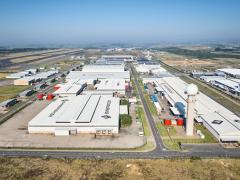
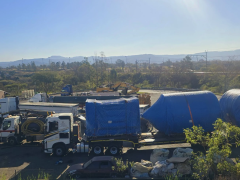
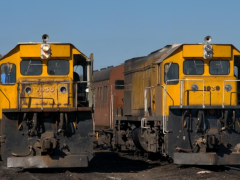
The Durban-based Grindrod group has developed an extensive network of logistics and transport businesses across southern Africa, supported with a programme of development investments, according to Dave Rennie, CEO of Grindrod Freight Services. “Even with the slowdown of growth in China, demand for African commodities continues to grow,” he told FTW. “The need, therefore, for on-going partnerships between government and the private sector in developing the infrastructure and capacity necessary to meet current and future demand is paramount.” A major part of this network is the Maputo Port Development Company (MPDC) – a partnership between the Mozambican Railway Company (CFM) and Portus Indico, comprising Grindrod, DP World and local company Mozambique Gestores. The concession period now extends until 2033, with the option of an additional 10 years of operation after that. Within the port area, Grindrod is also the majority shareholder in the Matola Coal Terminal (along with Vitol), and an investment of the equivalent of R8bn has been allocated to expand the capacity of the facility. Plans include land reclamation, the construction of two new berths, a stockyard and railway infrastructure. Grindrod is also investing R97 m in the Maputo Car Terminal, which it owns along with Hoegh, to expand its capacity from 52 000 to 150 000 units a year. Another major area of development for the Grindrod group is rail. Grindrod Rail provides a full spectrum of rail services across Africa, delivering both individual and integrated rail solutions for freight users in the region. It operates in Botswana; Congo-Brazzaville; DRC; Kenya; Mozambique; Nigeria; Sierra Leone; SA; Zambia; and Zimbabwe. “Rail is the mode of transport best suited to the movement of bulk cargo,” said James Holley, divisional CE of Grindrod Rail. “The historic underinvestment in rail, together with the proliferation of large mining projects, supported by general economic growth, has provided a favourable environment for growth in the rail sector in Africa.” Grindrod recently enhanced its operating capabilities by taking over the operations of the NLPI group on the North-South corridor. This incorporates Beitbridge Bulawayo Railways as well as an access arrangement with National Railways of Zimbabwe to the line between Bulawayo and Victoria Falls (approximately 800 kilometres of track). Also RRL Grindrod (Operations) operates various shunting and short-haul contracts in South Africa and Mozambique, and heavy-haul main line systems similar to those operating in Mozambique (Sena line) and Sierra Leone (Tonkolili line). The group’s rail offering also includes RRL Grindrod Locomotives developing and manufacturing locomotives specifically for the African environment. A recent takeover also offers synergies in respect of track maintenance and signalling contracts, according to Holley. The acquisition of Racec, an industry leader in rail track engineering and construction, he told FTW, complements Grindrod’s plans to provide signalling, communications and rail technologies across the African continent. It has also recently acquired a 20% shareholding in NWK – an operating company that trades in agricultural and agri-related products, resources and services. NWK already has business interests in Botswana, Zambia and the Netherlands. Grindrod Trading Holdings has similarly just acquired a 20% share in the 104-year old Senwes – another agribusiness company in SA, with retail and grain operations throughout the central region of the country as well as grain trading offices in Malawi, Zambia and Mozambique. INSERT & CAPTION Even with the slowdown of growth in China, demand for African commodities continues to grow. – Dave Rennie CAPTION Grindrod is investing R97 million in the Maputo Car Terminal to expand its capacity from 52 000 to 150 000 units a year.
‘Public private partnerships key to developing infrastructure'
Comments | 0
© Now Media. This content is protected by copyright and may not be adapted or republished. If you would like to discuss cooperation opportunities, please contact: editor@freightnews.co.za.