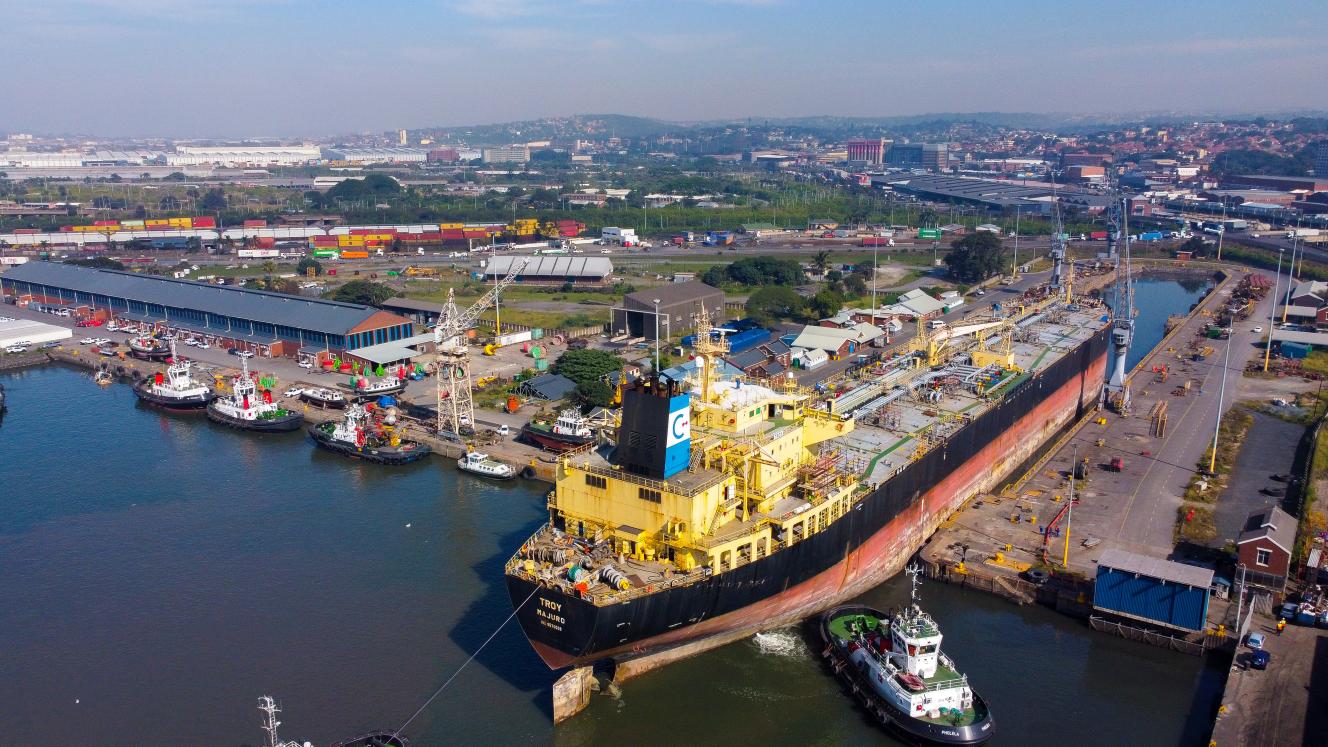
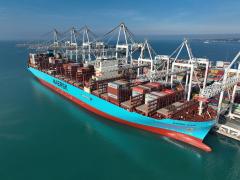
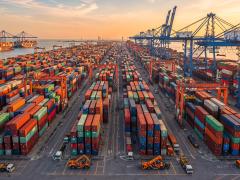
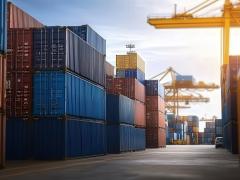
At a high-level media briefing at the Durban container terminal (DCT), Transnet launched and cleverly demonstrated the capabilities of its seven new ship-to-shore (STS) cranes working at full tandem-lift capacity. The DCT, said minister of public enterprises, Malusi Gigaba, is a vital component in the SA port infrastructure, and an equally vital part of the Gauteng-Free State-Durban corridor. Its development is one means of increasing the Port of Durban’s container handling capacity from the current 3.6 million to 12m TEUs in the next 30 years. In turn, the new cranes speed up the waterside productivity of the DCT, which for years has been challenged, mainly due to the use of old and outdated equipment, and the resultant high probability of equipment breakdown . Gigaba added that this new equipment could simultaneously handle two 12-metre (40-foot) or four 6m (20ft) containers, and lift up to a maximum of 80 tons – making them the biggest in Africa and able to handle new generation vessels with 24 containers stowed across the deck. The acquisition of these seven cranes is part of a programme that will, over the next 20 years, add 39 new cranes to the current SA fleet of 45 units at all the terminals – including STS, bulk and breakbulk facilities. The new cranes, costing a total of R700 million, were supplied by Chinabased original equipment manufacturer, ZPMC, following a competitive tender process in 2011.Of the eight tenderers, said TPT CE, Karl Socikwa, ZPMC was the only supplier that could offer tandem-lift units and deliver them in time to meet TPT’s requirement. Referring to the exhibition to the media of the tandem-lift cranes, Gigaba said: “The capabilities of these STS cranes will see a massive jump in productivity, with gross crane moves per hour (GCH) – a key measure of terminal efficiency and how well equipment is used – jumping from the current 26 to 33 GCH over the next three years. This is a 27% improvement. “Ship working hour (SWH) – the rate at which a terminal is able to load and offload container ships in an hour, and a key consideration for our customers – will improve from the current 68 to 85 containers once our operators are fully conversant with operating the equipment.” This will allow newergeneration vessels with larger parcel sizes to call at our ports – and that will be a 25% increase, Gigaba added. CAPTION The new cranes ... speeding up waterside productivity.
Productivity jumps as new cranes move into action
Comments | 0
© Now Media. This content is protected by copyright and may not be adapted or republished. If you would like to discuss cooperation opportunities, please contact: editor@freightnews.co.za.