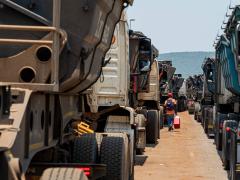
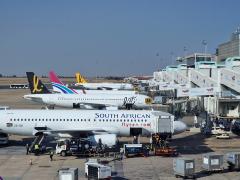
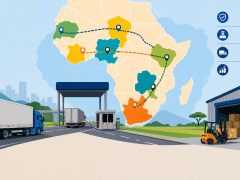
West African trade flows are changing as large- scale natural resource developments and rising global demand for bulk commodities reshape the region’s export landscape. In markets such as Guinea, Angola, Liberia and Ghana, rising bulk export volumes are creating new demands on transport and logistics networks. For the logistics sector, this presents a significant opportunity, but also highlights the ongoing challenge of aligning infrastructure capacity with rising demand. As bulk volumes increase, pressure is mounting on ports, corridors and shipping networks to improve efficiency, reduce delays and support more reliable cargo movement. “Bulk commodities remain the backbone of African trade, and what we are seeing now is a fundamental shift in scale,” said Athol Emerton, managing director of LBH Africa. “The real challenge is not whether demand exists – it’s whether logistics systems can keep pace with the volume and operational discipline required to move bulk cargo efficiently. This pressure means our customers need reliable and accurate information distributed to their network around the globe.” Despite strong growth fundamentals, infrastructure constraints remain a defining feature of the region. Common challenges include limited port capacity relative to bulk export demand, landside bottlenecks affecting cargo flow and competition between export cargoes and essential imports. In this environment, execution discipline was essential, said Emerton. “Bulk logistics relies on consistent, efficient performance, and even minor supply chain inefficiencies can quickly drive up costs and disrupt operations. An efficient ships agency and logistics system works hard to ensure reliability and cost efficiency.” The importance of efficient logistics is becoming increasingly evident as bulk commodity exports continue to expand across the region. This growth is being driven by several key commodity flows across the region, including bauxite and iron ore in Guinea, iron ore exports in Liberia, energy and mineral cargoes in Angola and continued diversified bulk and primary commodity flows through Ghana’s ports. Guinea, for example, has established itself as a dominant player in global bauxite supply, with seaborne exports increasing significantly in recent years and reaching record levels as infrastructure capacity expands. Simandou now also gives the country access to high- quality iron ore, supported by a world-class integrated rail and port system capable of handling up to 100+ million tonnes per annum at peak capacity. Similarly, Liberia is potentially scaling up iron ore exports through rail and port infrastructure upgrades and various opportunities According to Emerton, copper is continuing to emerge as one of the most strategically important bulk commodities globally. “Demand continues to rise sharply, with projections indicating sustained long- term growth driven by energy transition requirements. At the same time, it is clear that the landlocked copper-producing countries need more corridor capacity,” said Emerton. “Across Africa, copper exports remain concentrated in central and southern regions. However, the trade corridors connecting inland production areas to market are evolving; this is important for reliable bulk corridors and ports.” LV
Pressure mounting for improved logistics efficiency
Comments | 0
© Now Media. This content is protected by copyright and may not be adapted or republished. If you would like to discuss cooperation opportunities, please contact: editor@freightnews.co.za.