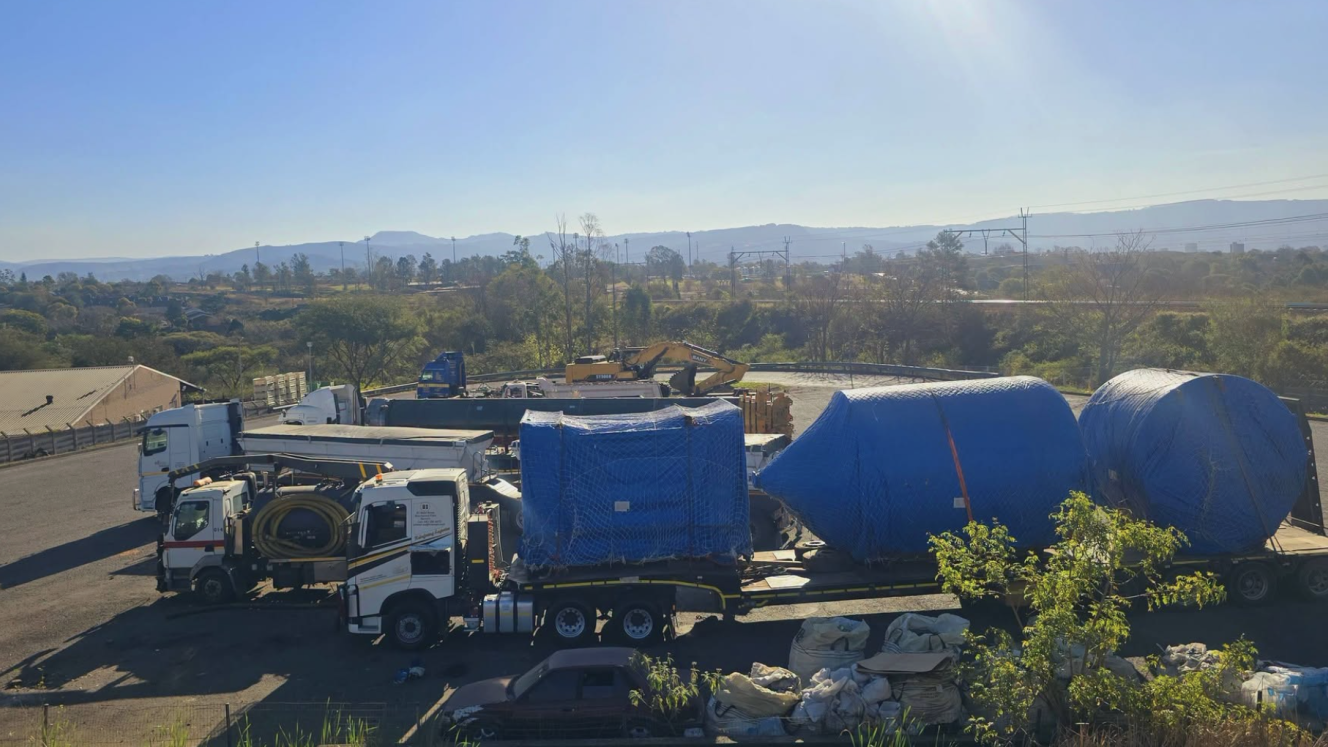
A recent accident between a container truck and an abnormal vehicle in the Port of Durban highlighted the “inanity” of two of the port regulations that the SA Association of Freight Forwarders (Saaff) has been fighting for some time, according to Carl Webb, MD of Project Logistics Management and representative of Saaff on abnormal cartage at the port. “We’ve had an ongoing argument with Transnet Port Terminals (TPT) about a number of ridiculous rules, which do no more than cause problems for port users,” he told FTW. The Saaff finger of accusation pointed at Saleem Peterson, former assistant terminal executive manager, who was cited as the person responsible for most of these “ridiculous” rules, being instrumental in the compilation of the Terminal Operating Guidelines (TOG), according to Webb. What was even more frustrating was that Peterson has since been moved out of the port to the Durban head office, but the rules remain. “None of these hopeless rules have been changed since his departure, even after we have presented strong arguments against them,” he added. There were two particularly contentious “guidelines”. One was that, after an accident involving a vehicle driven by a port employee, Peterson introduced the “no private vehicles in the port” rule. From then, port users had to use shuttle buses – a scheme which they accused of costing them valuable time and money for every port call. Second was, after a truckload of steel plate was stolen from The Point in Durban harbour, TPT tried unsuccessfully to blame clearing agents and transporters for their lack of security systems, according to Webb. “They therefore introduced a vehicle booking system that resulted in additional costs being incurred by the industry, and escalated already high logistics costs,” he told FTW. “But it did not prevent a repetition of the problem.” TPT would not acknowledge that they had an in-house problem, he added. But this latest accident headlines two other factors. One is a lack of appreciation by TPT of the needs of its port user customer base, according to Webb, and its refusal to provide adequate parking for abnormal vehicles having to wait until police escorts arrive. This, he said, is complicated by the fact that, under the Road Traffic Act, abnormals are only allowed to move during daylight hours, and late-inthe- day loading may cause them to have to wait until the following morning before being allowed to move. “The only answer is for them to park off outside the terminal wherever they can find space,” said Webb. The second factor is Durban TPT’s own “rather weird interpretation” of the application of the national landing fee. It is charged at full rate if the offloading is indirect. But, if the offloading is direct onto the trailer – which most transporters aim for - it is only charged at 50% of the tariff rate. But, in Durban, if your vehicle – complying with the law – is unable to clear the terminal within four hours, TPT applies the full, indirect landing fee, regardless of whether it was indirect or not. So, to escape this charge, the abnormal vehicle involved in the accident cleared the terminal area, and parked off on the private port road alongside the bridge to the Point ro-ro terminal entry. And the result was the expensive collision seen in the accompanying photograph. “As Saaff, we have tried to contest this, and the other worrying port rulings, at regional level for some considerable time,” said Webb. “But, these efforts having failed, Saaff is now raising it at national level.” CAPTION Unworkable rules are blamed for this recent accident between a container truck and an abnormal vehicle in the Port of Durban.
Port users slam 'insane' regulations
Comments | 0
© Now Media. This content is protected by copyright and may not be adapted or republished. If you would like to discuss cooperation opportunities, please contact: editor@freightnews.co.za.