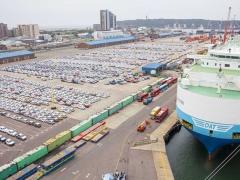
The Philippines is expected to become a Top Three perishable market for Maersk Line, according to senior director for reefer management, Thomas Eskesen. Much of the cargo in and out of the country (in the latter case, mainly bananas) is shipped breakbulk though many of the old breakbulk vessels are being scrapped, paving the way for reefer containers. Rounding out the line’s Top Three from a fresh fruit perspective are Brazil and West coast South America, particularly Chile/Ecuador. Not to suggest South Africa is an unimportant reefer market. Perishable Products Export Control Board (PPECB) statistics suggest containers represented 79% of South Africa’s export market in 2009/10, of which Maersk and sister line Safmarine handled nearly half. The biggest limiting factor in terms of viable growth in South Africa remains the country’s poor port productivity. “We have historically seen very nice expansion in South Africa and it has clear potential to grow in importance, as a share of our global market. “Not only does the country have easy access to Europe and the Far East but one could speculate it will benefit from developing markets in China, India and the Middle East so South Africa is really in a sweet spot.” Eskesen acknowledges large parts of Africa are growing much faster in reefer terms and are likely to outpace South Africa in the longer term. “We are seeing explosive growth in countries like Egypt and Morocco with their huge investments in grapes and citrus. Cameroon is growing banana and pineapple exports and there’s huge growth in Nigeria, which imports about one million tons of mainly pelagic fish a year, mainly from the Mauritania area but also from Norway, Peru and China. “Business is also huge for us in Angola with reefer chicken imports from Brazil and we also expect reefer exports to begin, which is really the sustainable way for Africa’s largely agricultural products to go.” What is a stark reality is that the reefer sector, while more complex, has become all the more flexible and in some instances, cheaper than airfreight. It must be said, though, technology does not come cheap. Development costs for the Aqualife lobster reefer container are estimated at around US$100 000 apiece.
Poor port productivity stunts SA’s reefer potential
Comments | 0