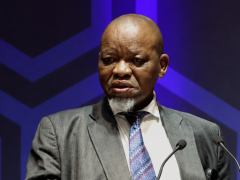
Transnet Freight Rail is confident that the acquisition of several longterm contracts is evidence of changing customer perceptions – and Themba Gwala, general manager for container and automotive business, believes that customer engagement is playing a key role. “The company has signed up several long-term contracts – Toyota SA, Sasol SA, MSC and Maersk Line amongst them,” he told FTW. “It is all about improving on transit times and operational efficiency and ultimately reducing cost that contributes to the economy of the country. Over the past four years we have seen significant growth on rail and on the Natal corridor especially.” From an initial three trains per day to an average of nine trains either way reaching 11 trains during the peak season, the Natal Corridor continues to show improved productivity, he said. “We believe we have turned the corner and with continued interactive engagement with all stakeholders – industry, ports and road transport – rail will become the transport mode of choice,” said Gwala, stressing that more importers and exporters should be looking at the rail option. “It is about understanding the customer’s needs and production schedules, executing delivery according to plan and effectively managing deviations. The planning of resources according to demand that meets with the customer’s expectation is key to customer confidence in the usage of rail,” he said. “It also makes economic sense to move traffic en masse rather than to track a road truck per consignment. TFR is committed to ensuring that we work together in finding solutions for rail to be fluid and efficient.” Quality is a critical factor in the car industry, said Gwala. “Cars should reach a dealer without scratches, dents or chips. Rail transport offers good quality because it is not exposed to stone chips and there is also less or sometimes no public interference. Thus quality is relatively guaranteed.” According to Gwala, rail has the capacity to transport large consignments both into Africa, to and from main ports and to domestic and international markets. “One of the major considerations of choosing rail should be its critical importance in lowering the cost of doing business in South Africa,” he said. According to Gwala, the perception is being created by some stakeholders in the industry who have a vested interest in road haulage – particularly transport brokers – that rail remains unreliable, fuelling perceptions about inefficiency. “Our approach to the markets is to change this perception by direct engagement with customers in developing value propositions based on service, cost benefit analysis and transit times. This, we have found, if managed through a service level agreement with proper key performance indicators for both parties, yields the desired results and benefits,” said Gwala. “Rail is a mass evacuator and between 80 and 100 trucks can be converted into a single train. Our trains are linked to ports to ensure efficiencies, greater security and reliability of service. Rail also contributes to a greener revolution and international markets are adapting to reduce carbon emissions. It makes sense to use rail.” INSET ‘Our approach is to change perceptions by developing value propositions based on service, cost benefit analysis and transit times.’ CAPTION: Themba Gwala ... lowering the cost of doing business in South Africa.
Perceptions about rail are changing - Gwala
Comments | 0
© Now Media. This content is protected by copyright and may not be adapted or republished. If you would like to discuss cooperation opportunities, please contact: editor@freightnews.co.za.