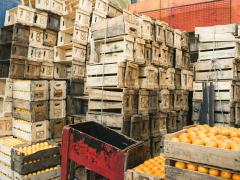
The devastating drought – characterised by the lowest rainfall since 1904 and a sharp fall in dam levels during the 2015/16 production season – has caused a 21% drop in the production of South Africa’s oranges, one of the country’s most precious fruit exports.
There is however a lot more that is impacting this fruit than just the recent drought, according to Paul Makube, senior agricultural economist at FNB.
“Diseases are the real challenge for the industry. Aside from the Citrus Black Spot (CBS) disease causing consternation between South Africa and the European Union, navel splitting has affected the Western Cape so much that exports there have reportedly dropped by about 17-20%,” he said
According to Makube, this has raised demand for navels from other regions of South Africa. This at a time when the export market was particularly strong in the EU, the Far East, Russia, and the Middle East, he commented.
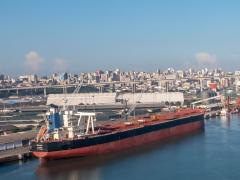
The European market is the leading destination for South African oranges, accounting for about 36% of total orange exports, followed by the Middle East with a share of 25% and the South-East Asian market at 12%. It therefore goes without saying that a decrease in this sector carries far-reaching consequences, in Makube’s view.
“Producers have started to switch to soft citrus, which in the longer term may eventually lower the status of oranges as being the export leader in terms of fruit in South Africa,” he said.
“This does not suggest that orange production is at its death bed. Outside the concerns, the current weather augurs well for the recovery in orange production with a rebound in volumes for the export market. When that is offset by the relatively weaker rand exchange rate, it is most likely to boost export revenue,” said Makube.