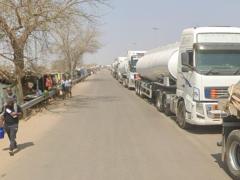
Delays at border posts remain the most pressing challenge for development corridors whose aim is to promote trade and investment. From limited border operating hours to operational constraints and a lack of harmonisation between countries, border posts remain a bone of contention for many. These delays are however receiving a lot of attention, says Barney Curtis, executive director of the Federation of East and Southern African Road Transport Associations (Fesarta). Last year the fifth Comesa meeting of infrastructure ministers and joint transport and communications, energy and information technology committees noted that one stop border posts (OSBPs) minimised delays. OSBPs remain a target in southern and East Africa where two are already operational at Chirundu (between Zimbabwe and Zambia) and Malaba (between Kenya and Uganda). Around ten are at various stages of development. OSBPs, however, entail much coordination, investment and planning, ranging from the physical construction of buildings and facilities to harmonised legislation between countries. According to Barbara Mommen, chief executive officer of the Maputo Corridor Logistics Initiative (MCLI), the problems at borders are exacerbated by other factors. These include the backlog in rail capacity which results in growing truck traffic, and that has implications for infrastructure maintenance and ultimately the cost of logistics and the efficiency of trade facilitation arrangements. “All these elements are linked in that the congestion and delays experienced at many border posts on the continent still represent the biggest cost to transport of freight, and have negative consequences for the competitiveness of trade – both within the region, on the continent and internationally,” she said. “The Maputo Corridor has been fortunate in that the customs modernisation programmes driven by the customs authorities, particularly affecting Mozambique/ South Africa trade, have been instrumental in reducing transit times, while the infrastructure upgrades on the corridor have also had an impact on relieving congestion and ensuring a greater level of efficiency.” INSERT ‘Congestion and delays experienced at many border posts on the continent still represent the biggest cost.’
One-stop borders the target in southern and East Africa
Comments | 0
© Now Media. This content is protected by copyright and may not be adapted or republished. If you would like to discuss cooperation opportunities, please contact: editor@freightnews.co.za.