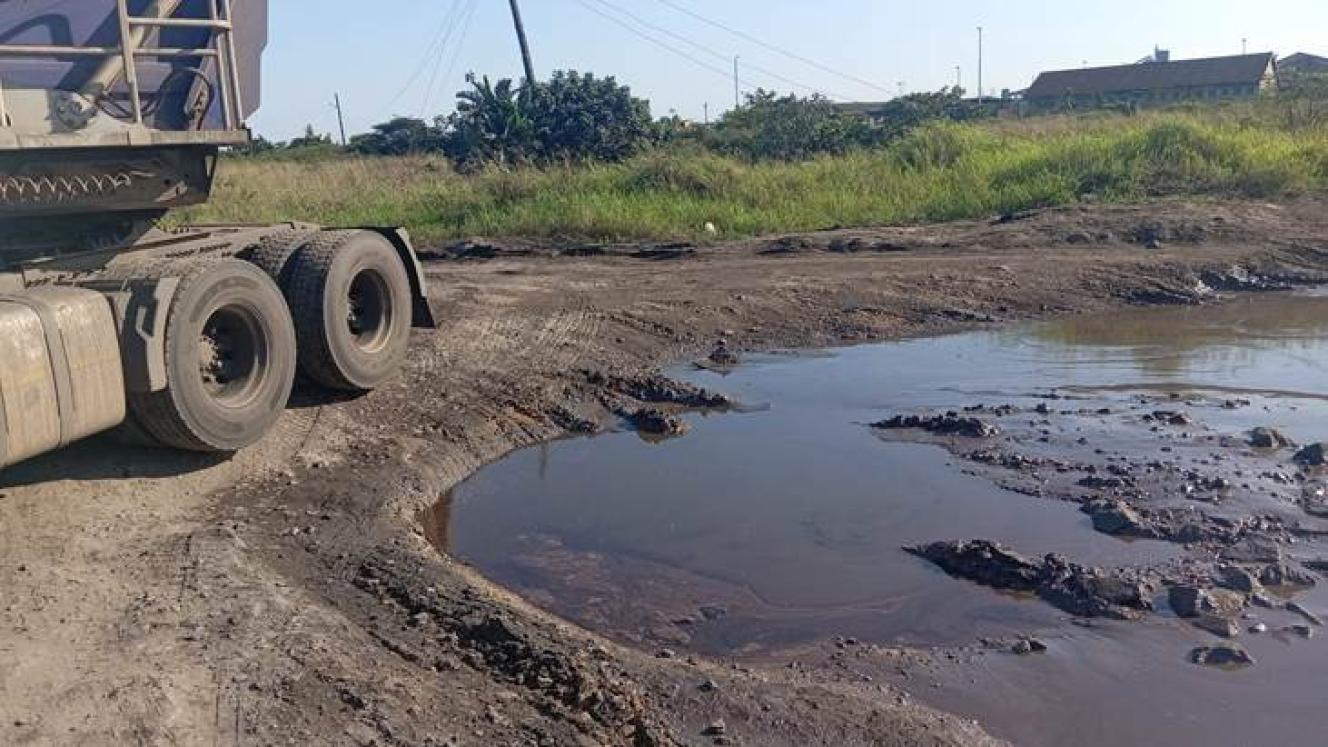
Looking at 'fair ways' to charge hauliers for damage to infrastructure, writes Leonard Neill THE DEPARTMENT of Transport plans to develop a model that will, for the first time, fully quantify road costs in terms of infrastructure damage, pollution, congestion and crashes in relation to heavy vehicle usage. It will then look at fair ways of charging road hauliers for these costs, says transport minister Abdullah Omar, always taking into account the fact that the road freight industry, unlike rail, receives no direct state subsidy. "The time has come to review the 56-ton gross combination mass limit currently in force in South Africa, which is one of the highest in the world," he says. "There is a proposal that I consider amending the Road Traffic Act to introduce a lower maximum payload for road freight. "This would have two major effects. It would add impact to overload control measures aimed at reducing road costs, and would increase the unit cost of road freight encouraging certain categories of customers to switch from road to rail. Here, again, we must take into account the fact that the road freight industry, unlike rail, receives no direct state subsidy. "If we turn to roads we see we have been living off our assets for the past 10 to 15 years and are now facing very significant costs to maintain the deteriorated network and restore the roads to a reasonable standard. "The economic costs of inadequate road maintenance are borne primarily by road users. When a road is not maintained and allowed to deteriorate from good to poor condition, every rand saved on maintenance increases vehicle-operating costs by two to three rands. "This situation is compounded by the impact on our roads of systematic vehicle overloading by a significant minority of our road fleet operators, in ruthless pursuit of competitive advantage at the expense of system sustainability. "In this context we need to do three things at the same time. We must seek creatively to expand the resources available for both road and rail infrastructure investment, while attacking overloading head-on. And we need to ensure that the road freight sector internalises at least some of the damage it causes, so that we create a more equitable environment for dynamic competition between road and rail."
Omar hints at lower maximum payload for road freight
Comments | 0
© Now Media. This content is protected by copyright and may not be adapted or republished. If you would like to discuss cooperation opportunities, please contact: editor@freightnews.co.za.