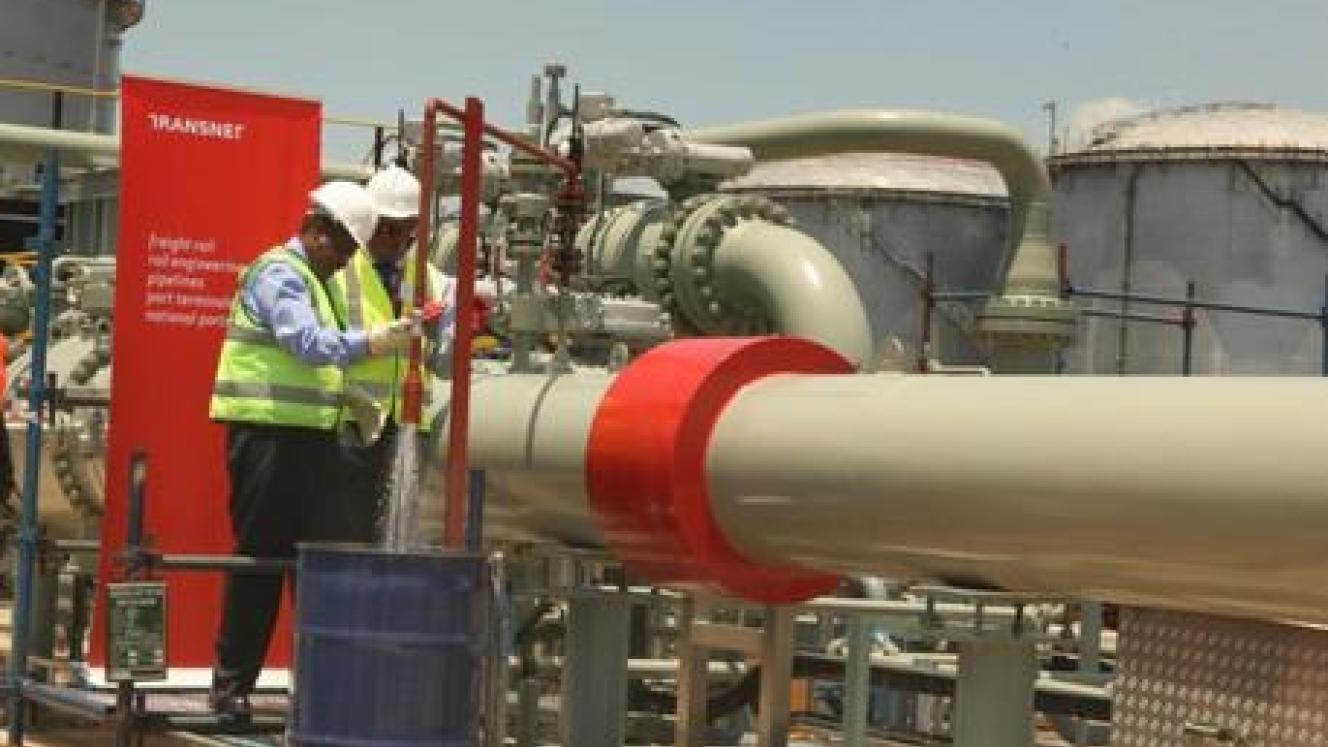
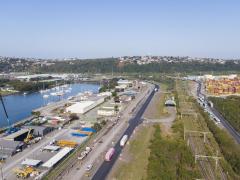
Ten months since the official launch of the Port of Ngqura, the latest figures show business developing at a satisfying pace, according to Siya Mhlaluka, the executive manager for Eastern Cape Terminals. “The number of scheduled ships now calling each week has grown significantly,” he told FTW. “Previously we were handling two vessels a week, with a payload average of 700-TEUs. Now we are handling an average of seven vessels per week – at an average size of 950-TEUs – operated by Mediterranean Shipping Company (MSC) and Mitsui OSK Line (MOL).” The average loading/ unloading time for each ship is 24-hours. “It obviously varies depending on the number of containers,” Mhlaluka added. The terminal is now averaging 22 000-TEUs per month, according to the latest port stats – 50% of this is transhipment, with exports and imports accounting for 24% and 26% respectively. The inland transport system to/from the port uses both rail and road modes, and is capably handling the traffic volume at the port. According to Mhlaluka, the needs are currently being serviced by two trains per day between Gauteng and Port Elizabeth, while the truck number has grown to match the needs, from 1 300 trucks a month to 5 600. He also noted that what he described as “a massive growth” in volumes was creating a challenge for the port. “Things are growing so fast,” he added, “that the number of containers supersedes the current number of operating staff. But the terminal is currently accelerating its resources plan, boosting the work-force from the present three gangs to five gangs by the end of September.” The computer port system being used is the latest programme installed by Transet – the Navis system – and Mhlaluka modestly described it as “satisfactory”. But one of the lines using the port was more complimentary. Discussing Ngqura with FTW, Iain McIntosh, national marketing manager for MOL, said: “The port is state-of-theart, and all-electronic, so there’s none of the old nuisance of paper documents. “There’s also a fantastic control room, which is also state-of-the-art – well up to European and Asian standards, which means that the productivity levels are very good.” Questioned on his current expectations about the future at Ngqura, Mhlaluka said that the port was currently extending berth quay length from 640-metres to 740-m. “This,” he added, “will enable 305-m length vessels to berth in tandem.”
Ngqura boosts workforce to cater for growing volumes
Comments | 0
© Now Media. This content is protected by copyright and may not be adapted or republished. If you would like to discuss cooperation opportunities, please contact: editor@freightnews.co.za.