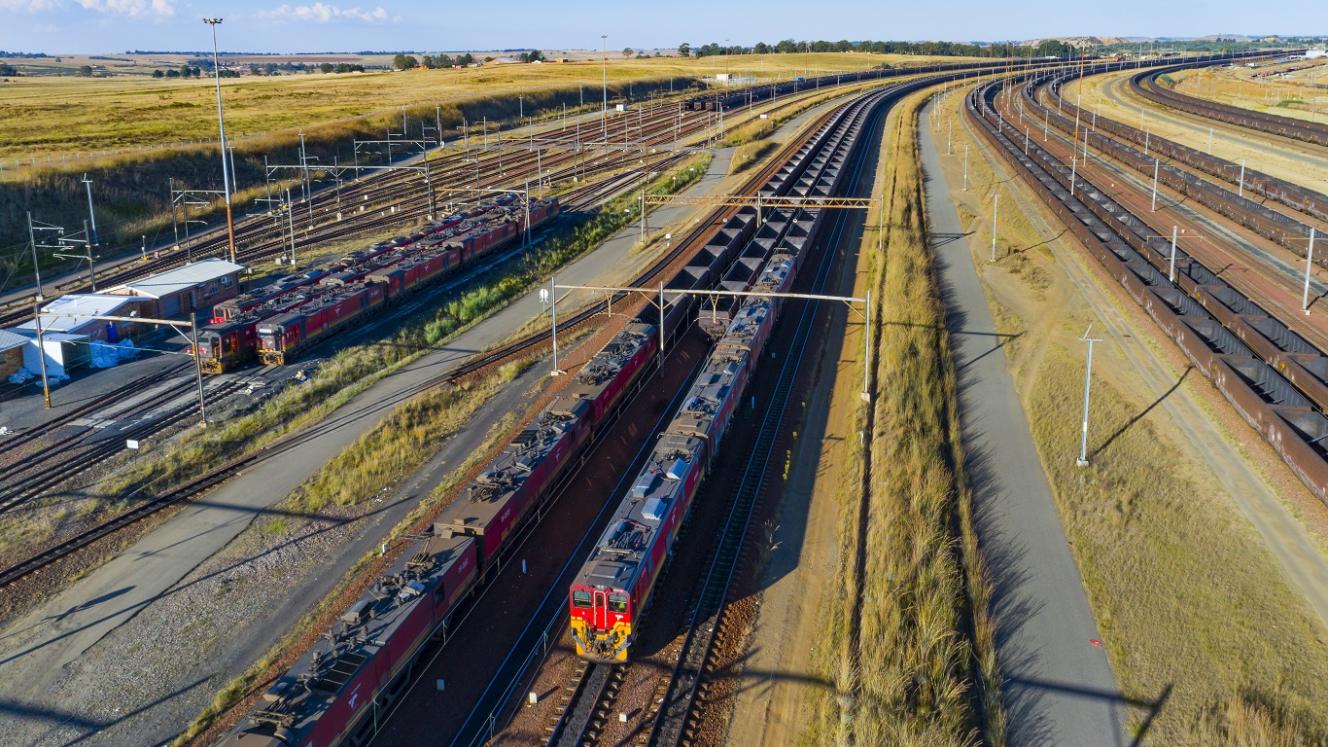
‘Arbitrary’ decision on payload for commercial vehicles ALAN PEAT THE TRUCKING industry is up in arms about what is termed an arbitrary decision by the national overloading control committee (NOCC) to effectively reduce the allowable permissible payload for commercial vehicles. It not only cuts almost a couple of tons off what a big road rig is allowed in gross mass and hacks chunks out of revenue-making capacity, but also contradicts a gentleman’s agreement made years ago between the road hauliers’ body and the department of transport (DoT). This deal was that you wouldn’t be charged with overloading unless you were more than 5% over the legal limit for the gross vehicle mass (GVM) of your truck. But now the NOCC has decided to cut this to a 2% allowance. In the official memo the authorities said: “With effect from June 15, the tolerance before prosecution will be as follows: l 5% on the permissible maximum axle and axle unit mass loads, as referred to in Regulations 234 and 235, and the minimum steering axle mass loads, as referred to in Regulation 242 of the Road Traffic Regulations Act; l 2% on the permissible maximum vehicle and combination mass loads, as referred to in Regulations 236 and 237, and the maximum mass allowed on a group of axles in terms of Regulation 241 (bridge formula) of the Road Traffic Regulations.” In simple terms, one trucker told FTW, this would mean that a “superlink” vehicle – which has a legal GVM under the bridge formula of 56-tons – could weigh a total (with its load) of 58.8-t before the traffic authorities would charge the operator with overloading and impound his vehicle and load. Under the new allowance it can only be 57.12-t (1.68-t less) before it is hit with the force of the law. Law-abiding The problem is that it not only makes it tougher for the deliberate overloaders, but will also hurt the bottom lines of the law-abiding transporters. A number of the big operators, for example, have fitted special mass-measuring sensors to their vehicles so that they can fine-tune their loads to fit in with the maximum allowable limit – that current 58.8-t for a superlink. But, from June 15, they are going to have to recalculate just how much they can load – but only up to the new, lesser limit before getting charged with overloading. The Road Freight Association (RFA) does not agree with this decision taken by the NOCC, according to RFA’s Mike Alistoun. It is not in accordance with the agreement made between the director-general of the DoT and the RFA some years ago – and the RFA is currently considering what action to take.
New ruling cuts revenue-making capacity for truckers
Comments | 0
© Now Media. This content is protected by copyright and may not be adapted or republished. If you would like to discuss cooperation opportunities, please contact: editor@freightnews.co.za.