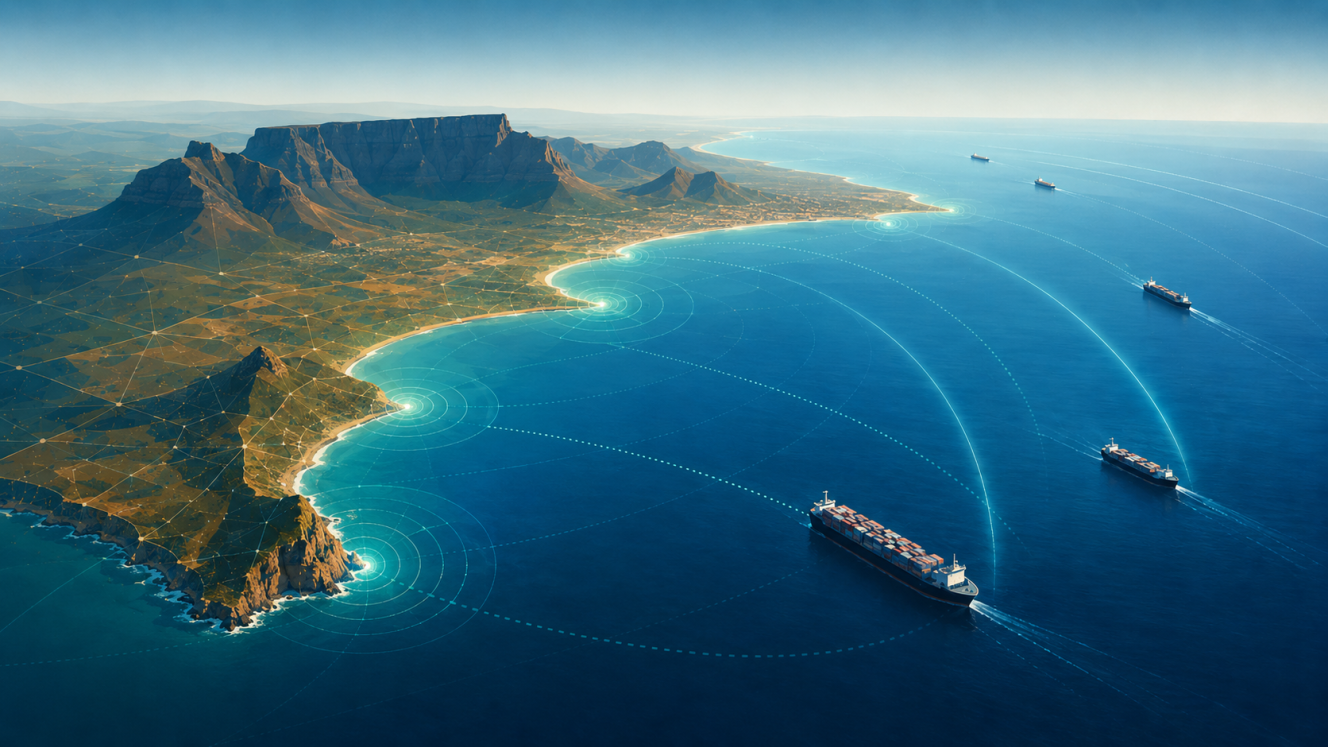
The South African Navy is rolling out a coastal radar network and exploring a satellite capability as part of efforts to strengthen surveillance of the country's waters.
Speaking at the recent Oceans Economy Conference in Cape Town, Admiral Musa Nkomonde, chief director: maritime strategy at the SA Navy, said the first phase of an integrated sensor network along South Africa's coastline was expected to be completed by the end of the current financial year.
“Additionally, our satellite maritime domain awareness programme is at an advanced stage, and we have entered into talks with two potential partners,” said Nkomonde.
The projects form part of a broader effort to improve visibility across South Africa's coastline and maritime zone, reducing the need for a constant physical presence at sea.
Nkomonde said technologies such as integrated sensor networks, satellite tracking, coastal radar systems, Automatic Identification System (AIS) data and intelligence-sharing platforms would enable the Navy and other agencies to track vessel movements, monitor diversions and identify suspicious activity in real time.
“These systems allow us to track vessel movements, monitor diversions and detect illegal activity at sea,” he said.
He added that drones were becoming an increasingly important part of the Navy's surveillance capability, as they can monitor coastlines, shipping lanes, fisheries and offshore infrastructure at a fraction of the cost of deploying frigates or maritime patrol aircraft.
“Integrated technology also enables what defence planners sometimes call a networked presence,” he said. “Even when the South African Navy has limited vessels at sea, combining drones, radar systems, satellite imagery and shared operational data creates the perception, and often the reality, of continuous surveillance and response capability.”
This helped maintain deterrence despite reduced force levels and was particularly attractive given the high cost of operating major naval platforms.
According to Nkomonde, strengthening maritime security was becoming increasingly important amid growing activity around South Africa's coastline and ongoing disruptions to global shipping routes.
He said instability in the Strait of Hormuz highlighted the vulnerability of global trade and energy supply chains, often resulting in increased surveillance and security measures.
“Disruptions in the Strait of Hormuz are increasingly framed as threats to global economic stability,” he said. “For South Africa, increased shipping activity around the Cape route may have similar implications, strengthening the case for enhanced maritime security and defence capabilities.”
Nkomonde said maritime security extended beyond the protection of territorial waters and included safeguarding shipping lanes, ports, offshore infrastructure, marine ecosystems and those working at sea.