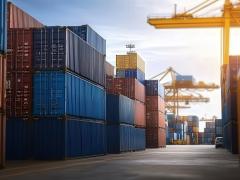
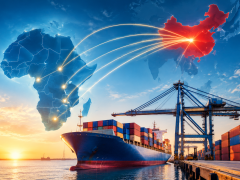
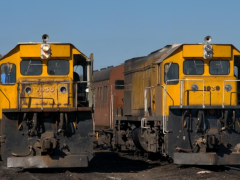
Maersk Line has singled out Africa as a market of significant opportunity – and SA MD Jonathan Horn has committed to working with the line’s customers to establish their Africa ambitions and build those into the design of its product. He estimates that Africa currently represents 5% of Maersk’s total flows. (Asia accounts for 50% followed by Europe and the Middle East). “The trade is however very skewed from an SA point of view – there’s a lot going out but not a lot coming back,” he told FTW last week. “The challenge to all shipping lines is to put together a profitable product because the trade is largely one way.” Volatility in demand is equally challenging, says Maersk’s SA trade executive Matthew Conroy, with project cargo making up the majority of cargo moving to neighbouring countries. “The three largest markets are Kenya, Angola and Nigeria, and we have recently introduced a new direct product from SA to Nigeria,” he said. For South Africa generally exports dominated last year, with Maersk’s market growing in excess of 10%, fuelled by the rate of exchange and the appetite for commodities, particularly from China. “A large portion of that growth came from chrome and manganese and not finished goods,” said Horn. Imports in the same period rose only 5%.” He expects more of the same for exports in 2014 with the impact of sustained weakness in the currency likely to continue to affect import growth. “Last year we expected mid single-digit growth in both imports and exports but the faster than expected depreciation of the rand immediately changed the playing field,” he said. In terms of refrigerated cargo 2013 was one of the best years ever with growth of around 8%. But a far less optimistic picture is emerging for 2014 thanks to weather-related damage to crops. And in a market where supply and demand dictates freight rates, there’s been pressure on import rates with the drop in demand while export rates rose marginally in 2013 and appear to be headed in the same direction for the year ahead, he said. INSERT & CAPTION Volatility in demand is a challenge, with project cargo making up the majority of cargo to Africa. – Matthew Conroy
Maersk sets Africa focus
Comments | 0
© Now Media. This content is protected by copyright and may not be adapted or republished. If you would like to discuss cooperation opportunities, please contact: editor@freightnews.co.za.