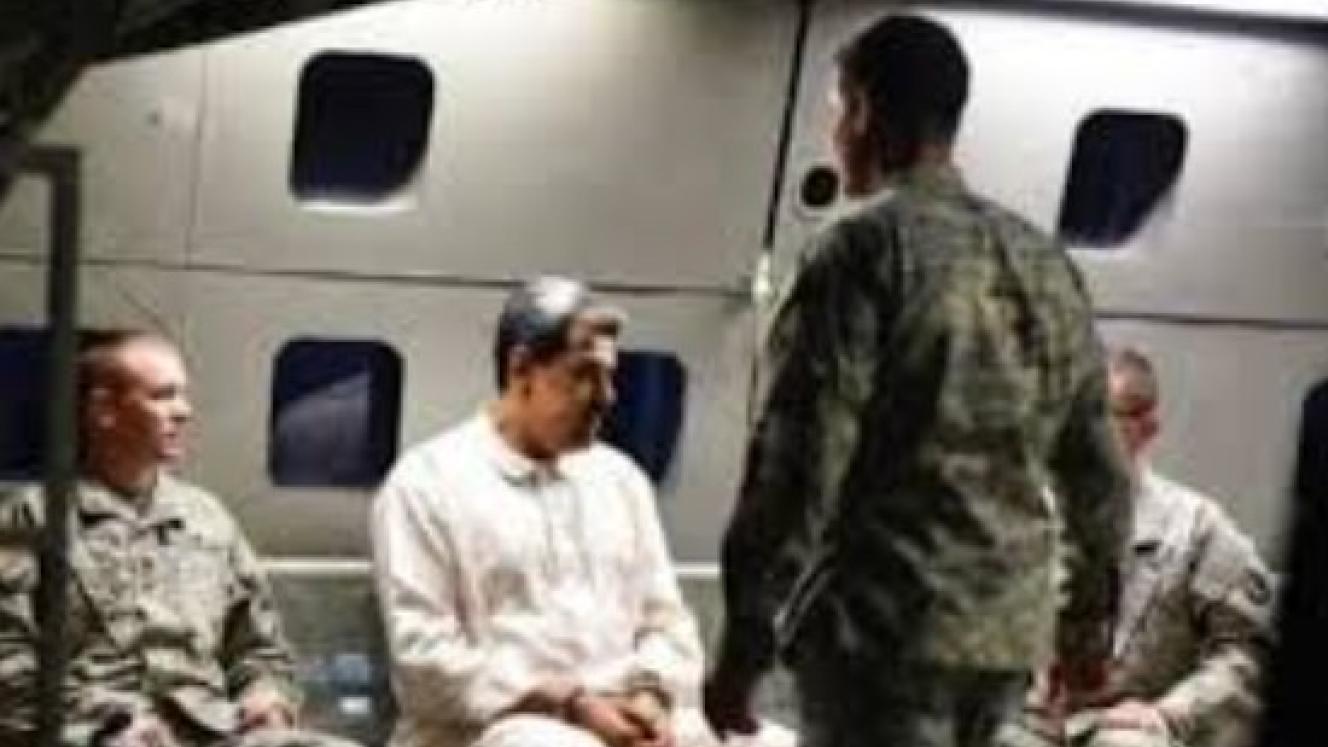
The US military capture of Venezuelan President Nicolás Maduro and his wife Cilia Flores in Caracas has prompted scrutiny of leadership-disruption scenarios and their potential impact on commercial shipping.
Ambrey’s latest Insight report titled A New Scenario Against Taiwan: Could a ‘Capture’ Operation Become Thinkable? warns that any fast-moving leadership-focused coercion against Taiwan would primarily threaten shipping through uncertainty.
“In a Taiwan leadership-disruption scenario, the greatest threat to commercial shipping is sudden uncertainty. Operators navigating the Taiwan Strait need early warning, legal-operational clarity, and decision support to manage administrative interference, protect personnel, and control costs during fast-moving ‘shock window’ conditions,” the report states.
Ambrey explains that even without a declared blockade, Beijing could rapidly impose a maritime “control narrative” using law enforcement vessels to stop, board, divert or delay ships under a legal framing. This administrative interference would expose crews and masters to heightened “lawfare” risks, including coercive inspections, document/device seizures, detentions and interrogations.
The most immediate commercial impacts would stem from war-risk insurance reactions: sharp premium spikes, cover delays and potential voyage-approval hurdles as underwriters reassess exposure in the Taiwan Strait. These effects could materialise within hours of any perceived escalation, regardless of whether physical strikes occur.
The report assesses that a Venezuela-style leadership “capture” attempt remains operationally difficult and escalation-prone for Beijing.
Taiwan’s resilient institutions, clear succession rules and “porcupine” asymmetric defences make outright political control unlikely from such an action.
Constraints include high intelligence and execution demands, the risk of unifying Taiwanese resistance, and the danger of rapid US or allied involvement triggering broader conflict. Instead, a more plausible adapted pathway involves phased multi-domain coercion designed to create a brief “shock window”:
*Legal and narrative escalation framing Taiwan’s leadership as “separatists” under domestic laws such as the Anti-Secession Law.
*Intense electronic warfare to degrade command-and-control, surveillance and communications networks, slowing Taiwan’s crisis response.
*Psychological and informational exploitation to induce “jammed leadership” conditions, disrupting decision cycles, creating information overload and amplifying perceptions of isolation and vulnerability.
Ambrey notes that while not requiring physical seizure of individuals, this sequence would compress Taiwan’s ability to coordinate mobilisation and coherent resistance, buying Beijing time to press political demands before external support stabilises the situation.
For shipping, the critical period lies in the early hours of confusion: fast-changing advisories, conflicting instructions from multiple sources, and increased misinterpretation risk near Taiwan’s northern and western approaches. Ambrey stresses that operators face elevated exposure even in grey-zone conditions.
Recommendations for owners and operators include:
*Pre-defined 24–72-hour crisis playbooks with clear diversion triggers for Taiwan Strait transits.
*Preference for east-of-Taiwan routing during heightened tension where commercially viable.
*Boarding readiness drills, standard document packages, and strict policies on device access and crew interviews (stick to factual navigational details; avoid political commentary).
*Crew device hygiene and minimisation of sensitive material onboard.
*Proactive insurance protocols, including predefined triggers for underwriter notification, confirmation of war-risk additional premium terms, and charter-party clauses covering disruption, deviation, off-hire and force majeure.
The report concludes that while a direct Maduro-style capture is improbable as Beijing’s opening move, the concept – amplified by the Venezuela precedent – reinforces psychological pressure. If Beijing perceives an irreversible status-quo shift by Taipei, the resulting uncertainty could impose the most acute near-term costs on Strait shipping through administrative control, lawfare and insurance volatility.