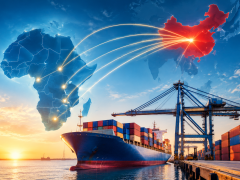
The escalating use of violence by pirates off the East and West coast of Africa is forcing ships to fight fire with fire. According to Associate Professor of Criminology at the University of South Africa, Henry Fouche, the level of force used by pirates is increasing. “They are using bigger ships to gain access to vessels and higher artillery weapons such as RPG rockets and automatic weapons to gain control,” he said. “The attacks are random and very difficult to prevent as they can happen any time and anywhere.” It is for this reason that more and more shipping lines are moving away from the softer approach to fighting off piracy that includes wrapping barbed wire around the deck, shining bright lights at attackers or even firing at them with water guns, to “harder” methods such as carrying armed guards on board. According to Jason Stramrood, Africa marine operations manager of Maersk Line, it is ultimately about the protection of the vessel, its crew and cargo. “Armed guards on board remain a last resort, but as the piracy attacks increase and the violence used escalates, shipping lines have no other choice, which is why this approach is being entertained.” Stramrood said they had placed armed guards on a number of vessels to see the impact and it had definitely given crews more peace of mind. “Of course the implications of having armed security on board a vessel must also be taken into consideration because engaging in gun battles with pirates in the middle of the ocean is not what anyone wants for this industry.” He said it was also a complex process to put armed guards on vessels. “It is not about getting a few ex-military people and giving them some guns. One has to take the ports you are visiting into consideration and what licences are needed to bring a vessel with weaponry into a country. Also, while at sea, where do they keep the weapons,” he said. “Where does one embark and disembark the security people and the declaration of the weapons at every port. All of this is a logistical nightmare and it affects the movements of where you can go.” But, he said, with crews fearing for their lives it was proving to be the only way in some cases. “We have very good security plans in place and have also spent a lot of time and effort in the training of crews to allow them to be in a better position to deal with hostility.” Stramrood said at Maersk Line there was also the 80 knots policy that was not veered from when in waters known for piracy. “A vessel with a high freeboard travelling at 80 knots per kilometre is very difficult to stop and board. At the same time we stick to the transit corridors and try to avoid areas where the attacks occur.” According to Fouche this is one of the aspects proving difficult to control as attacks are becoming more random. CAPTION The attacks are random and very difficult to prevent as they can happen any time and anywhere.
Lines opt for armed guards as pirates become more violent
Comments | 0
© Now Media. This content is protected by copyright and may not be adapted or republished. If you would like to discuss cooperation opportunities, please contact: editor@freightnews.co.za.