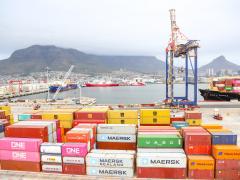
It has been a year of growth at the Port of Durban – growth that has been accompanied by improved productivity, according to Andrew Thomas, CEO of Ocean Africa Container Lines (OACL) and chairman of the SA Association of Ship Operators and Agents (Saasoa). And the relationship between the shipping lines and Transnet is very strong and continues to improve. “Through the Container Liner Operators’ Forum (Clof) we have worked closely together with Transnet, and we have been able to share all sorts of information,” Thomas told FTW. The growth at the port has been headlined by the new Pier 1 container terminal coming on-stream. “This now gives a total theoretical capacity for the port of 3.2-million teus a year,” said Thomas, “and we are looking at about 2.6-m teus throughput this year.” Berthing delays have also been less this year. According to a ship’s agent, his line’s container ships have faced an average berthing delay of 14.6 hours in Durban, which is well below the critical 16 hours average berthing delay that heralds possible congestion surcharges if exceeded. The agent was equally happy with Pier 1, where he expressed delight at ships being able to berth less than two hours after arrival off the Port of Durban. There have even been issues of bad weather having some impact on working the container ships alongside their berths. “But,” said Thomas, “Transnet’s recovery times at the terminals have been much better. “They have set targets and are working hard towards improving productivity and throughput, on top of the investments they have made. Although there is still, and probably always will be, more that could be done, we’re getting there.” As part of the element of things-getting-better, Thomas noted that Transnet port management had had “a stable organisation” for a number of years now – as opposed to the frequent management reshufflings of the past. “They have had a core team of management in place for container movement for three to four years now,” he said. “And that is making a difference.”
Lines give Port of Durban the thumbs up for improved productivity
Comments | 0
© Now Media. This content is protected by copyright and may not be adapted or republished. If you would like to discuss cooperation opportunities, please contact: editor@freightnews.co.za.