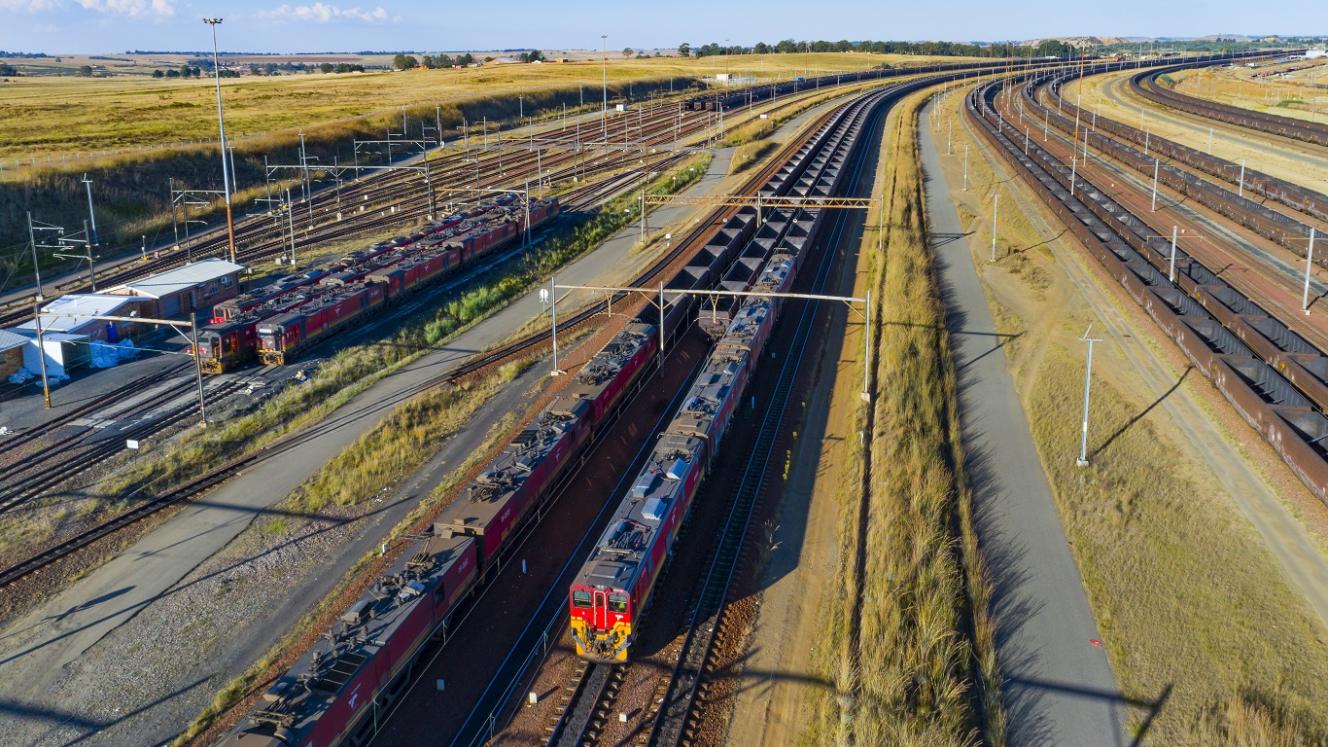
Disagreement abounds on range of issues KEVIN MAYHEW THERE IS an element of marketing that requires that you take a less than adequate product, service, company, policy or government and you “talk it up”, thus enabling it to achieve a status it frankly does not deserve. To a certain extent this is the case of Africa and its sub-regions. Today, all the rage is to refer to this continent - generally regarded as the dark one of the planet’s seven – in glowing terms such as “Africa has reached its time” or “The continent of the future”. Yes, it is true that India and China are hosting, toasting and generally gushing about Africa’s position in the world during the next few decades. To believe that most of this is not purely for self interest would be delusional. But talk it up everybody is. Despite a few glimmers of hope for salvation, Africa’s Renaissance,, so glibly referred to along with its economic sibling the New Partnership for Africa’s Development (Nepad), are being dragged down by a lack of cohesion and plain old political will to create the cross border transport network. Axiomatically, without this foundation, the rise of Africa remains nothing more than a heavily loaded pipe dream. For the purposes of this article our focus will be on the various points that link the countries of sub- Saharan Africa – and it is glaringly obvious that only a few of the routes that will underpin this African metamorphosis are getting on with the job in some sort of earnest manner. For the various bodies and individual countries that are trying to get the whole system up and functioning it is frustrating to say the least. Cross border arrangements are always difficult, but economics dictates that one has to compromise and see the bigger picture or take the long term view and not short term expedience. At an inter-government level, many of the routes lie in a desperate state because no agreement can be Lack of cohesion stymies streamlined border dream Disagreement abounds on range of issues reached about collection of money, sharing the spoils, uniform toll fees, and various guises of environmental levies to name just a few of the financial problems that are immediate showstoppers. If the show remains on the road, then there are other problems of bribery of local traffic police, payment of fines for transgressions, weighbridge accuracy and other operational issues. All of these factors are inhibitors and financial and time drains for operators – and we are only dealing with road routes. On the positive side, there has been some significant progress at some border posts with setting up one-stop shop processing that reduces time and ultimately costs. This is one of the focuses of the World Bank, which has financed much of the preliminary “observatory” work that has been done to try to establish some sort of accurate database of relevant information to develop the different routes – today referred to as transport corridors. The Maputo Corridor has pioneered the way to develop a strong multi-modal link between landlocked areas and outlets to the sea but it is fortunate as it only has to deal with one government, that of Mazambique. On the West Coast the corridors emanating from Walvis Bay and Luderitz (Trans Caprivi, Trans Kalahari, Trans Cunene and Southern Extension) are also managing to get governments to work together for the grander good. Entwined with the Southern Extension is the nascent multimodal hub that is being attempted in Upington in Northern Province. In microcosm it totally reflects the problems of politics and debilitative power plays. Theoretically, Upington presented a compelling case for becoming a mainly air cargo hub for perishables that come from Namibia but it can also serve clients that presently use an overstretched OR Tambo International Airport for time critical cargo – automobile parts for production plants inland or at the coast etc. Africa’s fundamental problems of conflict and uncertainty are already sufficient to make its illusions of some rosy sustainable future almost stillborn in key areas. What is needed now is for the countries that need access to ports and those through which transport routes have to proceed to pull together and declare an intention to make sure that the most basic building block of the continent’s future – its cross border transport network – is achieved rapidly and kept functionng with good road and rail links and efficient ports. To quote one leading company representative seeking to exploit the opportunities of Angola with its Gross Domestic Product of 10.3% (but inflation of 16.6%). “Angola is the sleeping giant of the continent – it has everything from minerals to oil to an ideal climate for agriculture. Forget the landmines that can be removed if areas are established for agriculture for instance. “Look at the roads and you will see major routes from key areas are donga-ridden sand tracks that made our 3000 kilometer trip one of almost two weeks in a 4x4. Heavy vehicles on some of the routes have spawned a new industry – unemployed men line the roads at the base of hills and are paid to help trucks up hills that they are forced to negotiate at a slow speed and simply cannot make it if loaded,” he said. That is an extreme case and a tarred stretch of road from Luanda to link the hinterland of Angola is being constructed – need we say it, by the Chinese.
Lack of cohesion stymies streamlined border dream
Comments | 0
© Now Media. This content is protected by copyright and may not be adapted or republished. If you would like to discuss cooperation opportunities, please contact: editor@freightnews.co.za.