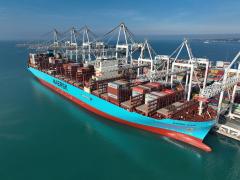
Last week’s announcement that Safmarine would integrate its internal support and corporate management functions into the Maersk Line organisation, resulting in 240 redundancies worldwide, reflects the state of the global shipping industry. Driving down operational costs has become an industry imperative and this latest move is designed to do just that. “Safmarine has been a successful brand and organisation for many years – and that is clearly recognised by the AP Moller Maersk organisation,” Safmarine Africa region executive Jonathan Horn told FTW last week. “And that’s an important message for our customers and staff.” The shipping market has changed forever since the last recession, and it’s becoming increasingly difficult for lines to attract a premium from a rates perspective for a premium-type service. In the changed economic environment, driving costs out of the organisation and continuously improving efficiencies has become increasingly important, said Horn. The question that shareholders asked themselves was whether it was necessary to run two separate organisations and corporate infrastructures to effectively run two brands – and clearly the latest development reflects their thinking. “In the structural change that is proposed, who the customers deal with, the type of service they receive and the voice they speak to will be unchanged,” said Horn. What is affected is the back office and supporting infrastructure that that will be delivered through the Maersk organisation. “The work done in the Antwerp headquarters, which includes the functional and trades organisations and regional offices will be delivered by a Safmarine CEO and his/her team based in Copenhagen, leveraging the Maersk Line corporate infrastructure. The CFO will be appointed in the next few weeks,” he added. “The Safmarine CEO and supporting team will be responsible for making sure the brand continues to evolve and our differentiation continues to be felt,” he said. Maersk announced last week that current Safmarine CEO Tomas Dyrbye would be leaving the position. The changed nature and scope of the CEO role was the prime reason for his not wanting to continue in the position. While the press statement revealed that Safmarine’s Antwerp head office and regional offices in Antwerp, Shanghai, Dubai, Cape Town and Mumbai would all be closed, there is still no clarity on names and numbers of people affected in the local operation. “At this point the consultation process has just begun,” said Horn. “Every effort will be made to accommodate the many good people that are affected, but there are likely to be redundancies. While the company works through its consultation process, the important focus right now is on employees – especially those impacted by the move – and customers, said Horn. In terms of vessel ownership, while the management of container vessels and operations around that are already integrated into Maersk, the Multi-Purpose Vessel (MPV) business of Safmarine will be unaffected. Safmarine’s geographic focus is also unlikely to change. “Our core regions will continue to be Africa, the Middle East and India. We believe that our operating model works well in emerging economies.” And while Horn’s role is among those that have been made redundant, he stressed that the consultation process had just begun and that there was no clarity at this stage on who would go and who would remain in the organisation. “We’ll have to see what will unfold, but the company will do its best to accommodate those who have been impacted.” While it won’t be business as usual, Horn stressed that the company would do all it could to minimise impact in this period of transition for customers and staff.
It’s a sign of the times’
Comments | 0
© Now Media. This content is protected by copyright and may not be adapted or republished. If you would like to discuss cooperation opportunities, please contact: editor@freightnews.co.za.