The introduction of a 10% primary steel import tariff has delivered on its objective of stemming the flow of imports.
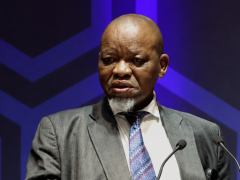
That was the message from Siyabulela Tsengiwe, chief commissioner of the International Trade and Administration Commission (Itac), who told delegates at the 2017 Southern African Metals and Engineering Indaba in Johannesburg recently that the move had resulted in increased orders for the domestic primary steel industry and re-employment and job retention.
He said the import tariff had followed “rigorous” investigations by Itac, with justification for the support of the domestic steel industry brought about by a change in global market conditions, an oversupply of steel, low prices and increased imports into the country.
“These imports were being sold at prices local producers could not compete with. And upstream industry increases were putting pressure on the cost competitiveness of the downstream steel industry,” he explained.
Tsengiwe said that Itac had attached conditions on tariff support to the primary steel industry with commitments being made by ArcelorMittal South Africa (Amsa) on fair pricing, which excluded duties.
Amsa also made commitments on production, investments and jobs, which are monitored by a committee established by Minister of Economic Development, Ebrahim Patel, in June 2016.
He added that Itac had looked at increasing tariffs for the downstream steel sector, which faces stiff competition from imports of finished products. To date, import tariffs have been increased on wire fasteners, wire netting and welded link chains, with more increases in the pipeline.
Rebates (a waiver on existing duties) are also being created in the case of specific products that cannot be manufactured domestically, including on certain hot-rod steels used in the manufacture of appliances.
Recently, safeguard duties – a different instrument from the ordinary customs duties introduced in 2015/16 – have been imposed on hot-rod steel. These duties (12%, 10% and 8%) are to be phased in over a period of three years.
Tsengiwe said the difficulty with formulating trade measures had been to balance all interests in the value chain. He believes tariff support has to be complemented by supply-side measures in order to improve the sector’s overall competitiveness.
“The government’s strategy is to maintain primary steel capacity while ensuring that the downstream accesses raw materials at competitive prices. The vision is for the whole steel value chain to be economically viable and sustainable. It is not a case of either the primary industry or the downstream industry. It’s complex and requires flexibility and creativity,” he said.
Worldwide, the price of primary steel has increased, particularly in the secondhalf of 2016 following China’s decision to cut back on production. Improving global demand, implementation of protective measures by various countries (including industrialised nations), and increases in the price of raw materials, including coking coal and iron ore, have also made their impact.
INSERT & CAPTION
Imports were being sold at prices local producers could not compete with. – Siyabulela Tsengiwe