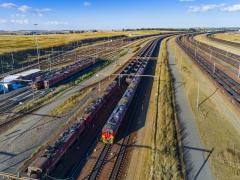
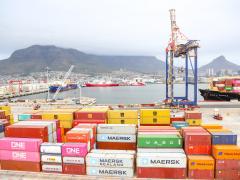
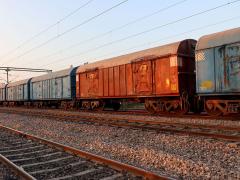
MARKET INTEGRATION based on efficient border infrastructure and services to allow for the free movement of people, goods and service is vital for the region’s economic development. That was the crux of the keynote address delivered by South Africa’s minister of transport, Jeff Radebe, at last Friday’s Nepad/ SADC Infrastructure Projects Conference in Johannesburg. Each government in the region must therefore be committed to and take responsibility for upgrading or putting in place infrastructure projects pertaining to the networking industries, transport, energy and ICT as well as basic infrastructure such as water, sanitation and shelter, he said. Only then can sustainable economic growth, job creation and poverty alleviation be achieved. The minister commended the SADC Secretariat along with the various development agencies on their efforts to identify and quantify the missing links in transport infrastructure, including rail, aviation and ports. While the New Partnership for Africa’s Development (Nepad) will assist with planning and facilitating the financing of the upgrading of roads along regional corridors, Radebe emphasised that partnerships with both local and international financial institutions must be pursued. He also noted that regional development banks should be more proactive and flexible with regard to longterm financing packages that are in the interests of the region. The minister quoted the study ‘Infrastructure, Regional Integration and Growth in Sub-Saharan Africa’, in which the authors identified infrastructure and regional integration as two mechanisms to facilitate stronger economic growth in Africa. Since the mid- 80s, the main focus has been on improving health and education yet, without adequate infrastructure, the quality of life cannot improve sustainably for the majority of African citizens. “In terms of international donor support in the 1990s, support for human development for Africa increased from 14% to 34%. This shift was accompanied by similar shifts in the expenditure of governments. At the same time, private investment in infrastructure did not materialise as initially expected. As a result, infrastructure has not received adequate attention in public policy and spending,” said Radebe. Lack of financial investment in infrastructure is, however, not the only problem with which the continent has to contend. “Let me emphasise that our desire to ensure massive infrastructure development as a platform for further economic development may be undermined by our lack of investment in skills development. While foreign investors bring about leading skills in design and the building of structures, much of the supporting skills must be borne by the local population. “In fact we must not shy away from producing skills that can provide engineering leadership in infrastructure development. Let us not allow the lack of skills development to define why as a continent we are in a vicious cycle of poverty and global marginalisation,” he concluded.
Infrastructure and regional integration key to growth – Radebe
Comments | 0
© Now Media. This content is protected by copyright and may not be adapted or republished. If you would like to discuss cooperation opportunities, please contact: editor@freightnews.co.za.