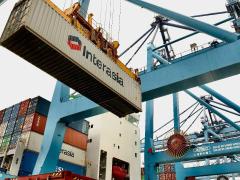
A southern African transport crisis is on the cards as industry and government remain at loggerheads over the future of high cube container transport come January 2019 when it will become illegal to move containers exceeding a height of 4.3m. Measuring 2.9m, high cube containers, when transported on the back of a normal transport vehicle, exceed the height of 4.3m as prescribed by South African law and measure around 4.6m. A moratorium was implemented in 2011 and currently gives blanket exemption to all ISO containers where the overall height exceeds 4.3m. But with only 11 months to go until the moratorium is lifted a crisis is looming. Government officials maintain industry has had seven years to prepare for this height restriction by transforming their transport fleets. Industry disagrees. Gavin Kelly, spokesman for the Road Freight Association (RFA), said that when the moratorium was implemented government officials undertook to research the movement of these containers and determine how safe or unsafe they were before reverting back to industry. Kevin Martin, at the time the chairman of the Harbour Carriers’ Association, agreed saying industry had commissioned research about the safety of containers measuring 4.6 metres that disproved claims these containers were unstable. “The government, however, took the decision to do its own research and it was agreed they would revert back to industry on why they were insisting on a 4.3m height. No feedback was ever given.” According to both Martin and Kelly industry never undertook to transform fleets as operationally and financially it was not feasible then or now. Government on the other hand disputes all of this saying there was no promise to research the height restriction. According to a spokesman for the Department of Transport (DoT), the moratorium was put in place to give industry the necessary time to procure the relevant trailers in order to comply – not to expect the department to change the provisions of the legislation when the moratorium is lifted. Various industry experts say several submissions have been made to the DoT over the past six years outlining the constraints both operationally and financially that short-and long-haul truck operators will face should they have to convert equipment. A further complication is that neither party seems to have any of the agreements in writing. “It’s the proverbial “Mexican stand-off”,” said a source. “This is a clear misunderstanding of how government and laws work – and while things may have been said, and even agreed to, at the meeting with the DoT, nothing was progressed. And in the absence of anything in writing it means that statute trumps recollections.” For all intents and purposes government is not backing off. At the end of 2017 DoT officials in Parliament reiterated the minister’s intent to enforce the law come January 2019. “If enforced I can only see bedlam and the immediate cessation of SA’s international trade in 40-foot high cubes,” a transporter told FTW. “Industry needs to get its act together and start working on this.” “As it stands the fruit industry faces a massive dilemma if the DoT does not act promptly, said Citrus Growers’ Association CEO Justin Chadwick. “Through Fruit South Africa (FSA), engagements have been made with the DoT with no forthcoming responses. Furthermore FSA have been working alongside the South African Association of Freight Forwarders (Saaff) and the RFA to encourage the DoT to either extend the moratorium (to allow for more research to determine if there are any implications to changing the regulations), or to amend the regulations to permit ISO containers to be transported on SA roads to a maximum height of 4.6m (as is the case with double decker buses). “As Saaff has not received an adequate response from the minister or the respective DG, they have written to the chairperson of the DoT Parliamentary Portfolio Committee to intervene in the matter,” he said. “Saaff will also be addressing the matter with Minister Davies of the dti.” Questions have been raised about whether government truly grasps the magnitude of the problem. Many industry role-players are convinced that the DoT will see the error of its ways and back down at the 11th hour.
INSERT with IMAGE
The fruit industry faces a massive dilemma if the DoT does not act promptly. – Justin Chadwick