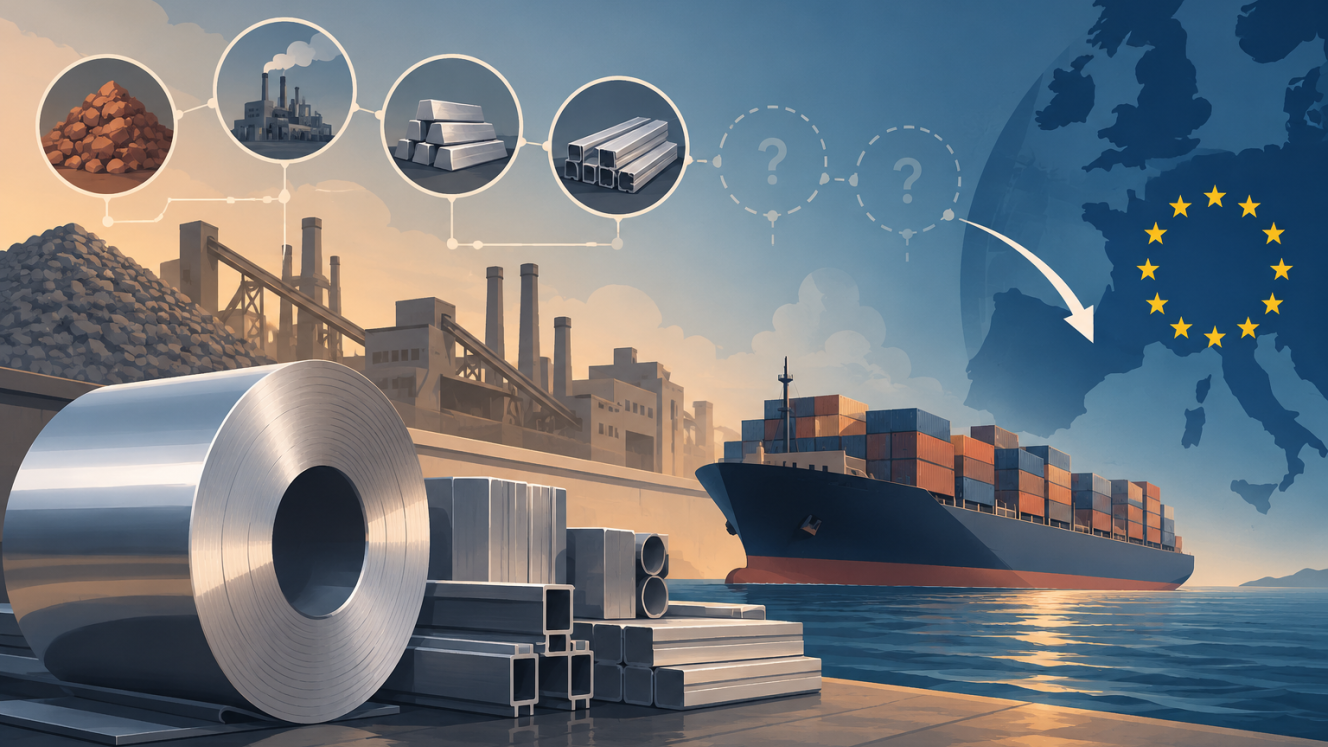
Gaps in production and supplier records could undermine the use of actual emissions data for aluminium exports under the European Union’s Carbon Border Adjustment Mechanism (CBAM), according to Hulamin environmental sustainability manager Sanelisiwe Mdlalose.
The EU accounts for 25% of the company’s annual sales volumes, Mdlalose told a CBAM accreditation and verification workshop hosted by the EU Delegation to South Africa on October 7.
Detailed evidence is needed to link finished products to raw materials, processing history and resource consumption. Missing information, including data from primary aluminium suppliers, increased the risk of having to rely on default emissions values, she explained.
Hulamin’s approach follows individual production lots through manufacturing to the packed product. Records link material inputs, production steps and resource consumption to each lot, allowing finished goods to be traced back through their processing history.
Material and energy balances provided cross-checks, Mdlalose said. These reconcile inputs, finished output, scrap and stock movements, while energy records are checked against other meters and supplier bills.
Missing records, incorrect links between meters and production lots, and the allocation of shared energy consumption were among the risks she identified. Reworking and recycling also require careful accounting to ensure relevant processing emissions remain included.
Detailed tracking did not, on its own, establish CBAM compliance, Mdlalose cautioned. Emissions factors, production boundaries, the aggregation of data and verification must also meet the mechanism’s requirements.
Electricity monitoring was retained as a control in Hulamin’s approach, she noted.
Evidence of carbon tax paid presents another challenge. South African tax payments and supplier records needed to be linked to the relevant goods and reporting periods, taking account of allowances, rebates and other compensation, Mdlalose said.
South African taxed emissions also need to be reconciled with the narrower CBAM emissions boundary. Tax verification timing may complicate that process, she noted.
Prospective CBAM verifiers based outside the EU must apply to an EU national accreditation body that accepts third-country applicants, Elin Lagnemo, lead assessor at Sweden’s national accreditation body, Swedac, told the workshop.
Applicants must define the CBAM activities they intend to verify, submit the required documentation and demonstrate the necessary technical competence, she explained.
Local accreditation bodies could assist with assessments under cooperation arrangements, while the EU accreditation body retained responsibility for reviewing applications and making accreditation decisions, Lagnemo said.