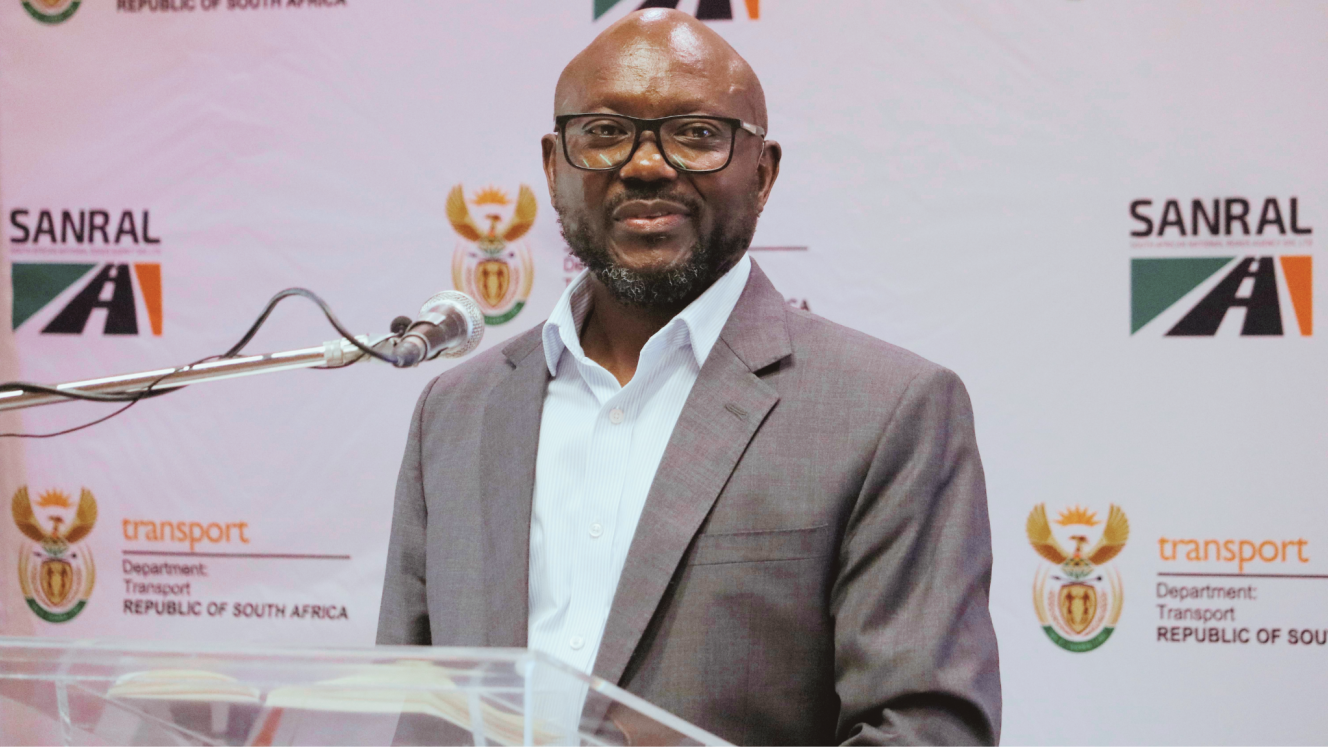
As the industry tries to put a figure to the cost to the road transport industry of Gauteng’s e-tolling, there are just too many variables, says Garth Bolton, joint CEO of the major trucking operation, Cargo Carriers. “For our fleet of 90 vehicles we are paying about R90 000 a month in e-tolls,” he told FTW. “That’s a pretty low figure.” Bolton said that a calculation on one route worked out at about 2% extra for the e-tolling element. But, he added, this figure was in no way universal throughout the road transport industry. Most of CC’s transport contracts are fairly long hauls, with only short distances actually on toll roads. “We don’t have services that operate purely in the Johannesburg region,” Bolton added. “However, courier/express and shorthaul container operations certainly would be hard hit.” Asked if CC was scheduling its routes to actually avoid toll roads, he said that this was not part of his operational team’s thinking. “With the extra speed and ease of travel compared to the secondary roads, we actually prefer freeways. As long as the toll fees don’t get too high, they are still the most cost-efficient alternative.” For the less financially well-endowed trucking operations, however, secondary roads may prove more attractive, according to Bolton. “If you’re working on a cash-flow basis,” he added, “it would probably be worth using secondary routes. But the problem here is that, as more people start to use them, these routes are liable to become congested.” A valuable trick in the company’s scheduling, however, is working out the time of the day when the CC trucks will be using toll freeways. “The time of the day has a marked effect on the total cost,” said Bolton. “There are two and a half hour peak periods in the morning and the afternoon. We have been able to negotiate quite a considerable off-peak discount, so aiming for these times of the day is an important operational tool.” Asked about the efficiency of Sanral’s administration system, Bolton was somewhat critical. “A lot of people feel they have not been billed in time,” he said. “It appears that the system has become moribund, and people are not receiving their bills.” He was also adamant that the fuel tax route was the more efficient one to follow. An extra 12 cents/litre would pay for the Gauteng development, and 36c/l for the national, he reckoned. “The oil companies already submit a sum to the government each month for the current fuel tax,” he told FTW. “All they’d need to do would be to increase that number. That would be only six cheques each month instead of the millions of bills that need to be administered for e-tolling.” However, Bolton stressed that the fuel tax income would need to be ring-fenced, purely for road development “There was some agreement within government, but they didn’t want to move into ringfencing and removing their freedom of usage of the tax,” he said. “And they had gone so far down the road towards e-tolling that they were reluctant to drop it.” INSERT & CAPTION We have been able to negotiate quite a considerable off-peak discount. – Garth Bolton
How much is e-tolling adding to your bill?
Comments | 0
© Now Media. This content is protected by copyright and may not be adapted or republished. If you would like to discuss cooperation opportunities, please contact: editor@freightnews.co.za.