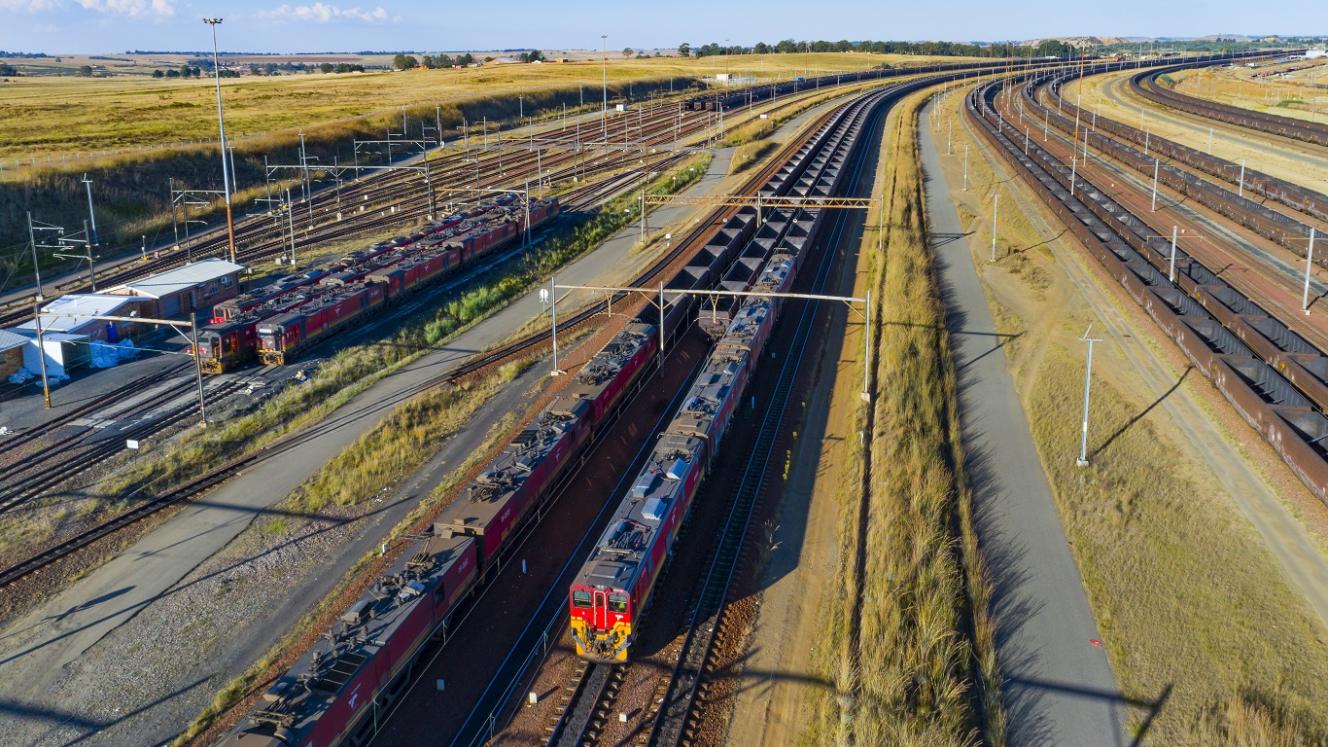
The SA trucking community is up in arms about a letter of intent from the department of transport for a proposed reduction of permissible axle mass from 9-tons per fourwheel axle to 8-tons on the secondary road system. This to move commercial vehicles on to the primary road network, and preserve SA’s secondary road network, most of which, said the department, has “reached a stage of disintegration”. There is also a plan to encourage goods transport to move from roads to rail branch lines. It is the intention, said the DoT, “to prohibit the transportation of certain commodities on both the primary and secondary road networks, and the migration of the same to rail branch lines”. The DoT is living in a dream world, according to a Durban trucker. “This was devised by somebody sitting behind a desk, and not in touch with the commercial realities of the land transport industries,” he said. Roads should be built and maintained to be able to take the loads using them, he added, not by devising a haphazard plan to save road surfaces and move cargoes from road to rail. A plan which, he reckoned, would only add significantly to overall transport costs – with all the inflationary elements of such an event. Gavin Kelly, technical and operations manager of the Road Freight Association (RFA), said the association was “totally against” this departmental proposal. “This for two reasons,” he told FTW. First, it will affect the overall vehicle payloads, “requiring a rush of extra trucks on the roads to distribute the same amount of goods”. “More trucks,” said Kelly, “and a higher cost-per-ton to move the goods will only increase transport costs, and therefore the cost of all the goods carried, and push up the end-prices of goods on-theshelf to consumers across the country. “It’s funny that they stress goods-carrying vehicles,” Kelly said, “when buses have a mass limit of 10.2-tons on the four-wheeled rear-axle. “What does more damage – an illegal-to-be nine-ton axle on a truck carrying goods or a legal 10.2-t on a bus carrying people?” There is also a serious contradiction in government policy-thinking. According to Barney Curtis, executive officer of the Federation of Southern African Road Transport Associations, the protocol of the Southern African Development Community calls for a harmonisation of permissible axle masses (amongst all the other vehicle specifications) amongst the member states. And the figure chosen was 10 tons. The problem is that the SA minister of transport has signed this agreement, and with this latest proposal to drop the SA axle mass the department will be shooting the minister’s agreement in the foot. “A 10 tons harmonised mass across the SADC region,” said Curtis, “but not in South Africa – where the new proposal suggests 8-tons. “This is completely unacceptable. We recognise that there is damage to the roads, but feel that this proposal is just a political ploy to move things to rail.” All the questions that are being asked, like what commodities are going to be banned from what roads, need to be answered before another move is made.
Hauliers slam DoT’s axle mass reduction proposal
Comments | 0
© Now Media. This content is protected by copyright and may not be adapted or republished. If you would like to discuss cooperation opportunities, please contact: editor@freightnews.co.za.