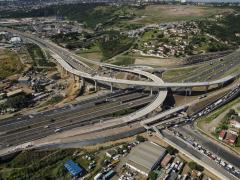
South African business could see massive savings – in both time and money – if the country embraced green wave technology, according to economist Mike Schussler. “It is estimated that the most simple of green wave technology can bring about savings of up to 10% in time, fuel and carbon emissions,” he said. A green wave is an intentionally induced phenomenon in which a series of traffic lights (usually three or more) are co-ordinated to allow continuous traffic flow over several intersections in one main direction. Any vehicle travelling along with the green wave (at an approximate speed decided upon by the traffic engineers) will see a progressive cascade of green lights, and not have to stop at intersections. This allows for higher traffic loads, and reduces noise and energy use (because less acceleration and braking is needed). A recent study by the World Bank reveals the newer green wave technology, along with intelligent transport systems, can translate into real savings of more than 20%. “In Dresden they saved 29% of overall time spent using transport just by coordinating trains, trams, trucks, motor vehicles and pedestrians,” said Schussler. “South African business should be lobbying for initiatives such as this with government. This is the first step to reducing our carbon emissions; we don’t just have to implement a carbon tax. There are other ways to go about it and cut costs.”
‘Green wave technology could yield massive savings’
Comments | 0
© Now Media. This content is protected by copyright and may not be adapted or republished. If you would like to discuss cooperation opportunities, please contact: editor@freightnews.co.za.