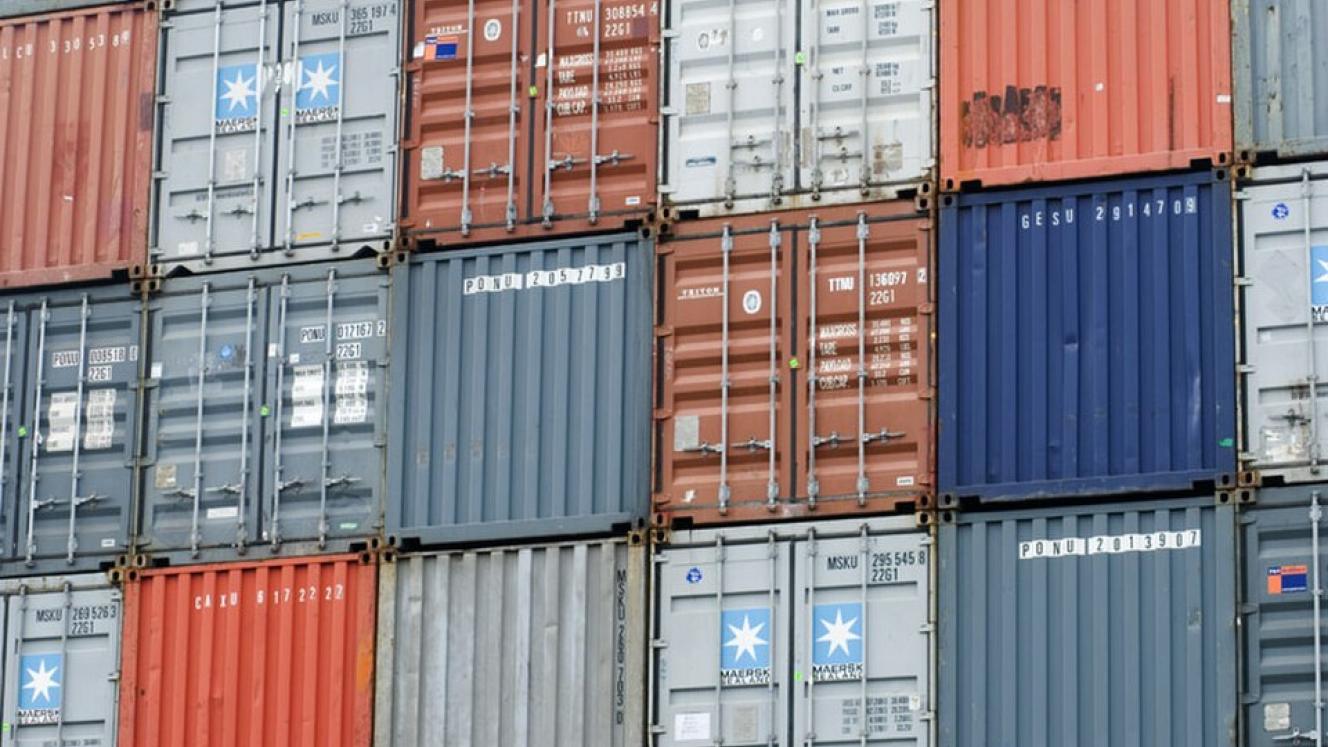
The global container market has done a complete 180-degree turn – moving from last year’s glut of empty boxes and container parks bursting at the seams, to a “first come, first served” shortage of empties. This is particularly true in Asia, where rapidly growing export trade has pushed up the need for boxes. And it’s spreading to Asia’s import partners with the lines rapidly redeploying empties to their home countries. A major ship’s agency on the Far East sea trade told FTW that they were “sitting short of boxes in SA”. It’s back to normal, said Lindsey Heynes of Grindrod Intermodal. “There are, of course, peaks and valleys. But just as they’ve always been.” The company’s empty container parks have “more space on the ground” compared to last year, as trade returns to normal and SA sends out a lot more exports, Heynes added. Gareth Weir of container leasing company, Triton, told FTW that his company couldn’t get its hands on empties out of the Far East. “The lines are looking for equipment,” he added, “and when they get it they keep it.” At the same time the price of new containers has gone up from US$1 850 last November to about US$2 400 now – a full 30% jump. The wholesale price of second-hand units has followed suit, and these price impacts have certainly filtered into the SA market. And, although Weir sees the demand jumping, the supply of new units (almost all from China) is still trailing well behind. “The problem is that the factories which shut down and laid off staff last year are now battling to find skilled workers, as the whole Chinese industry has revived,” he said. “Also, factories which used to run three shifts are now struggling to run one shift with the lack of available staff.” And customers ordering equipment now are having to wait till August for delivery, Weir added. He also predicts that worse is yet to come. At this time last year, more than 1.35-million TEUs of shipboard container capacity was sitting idle, with shipowners struggling to get sustainable freight rates, and hundreds of thousands of empty boxes littering ports across Asia – especially in China and Japan, where export volumes had gone for a ball of chalk. And the idle capacity eventually peaked at over 1.4-m TEUs. But the recent increase in demand led to a rapid reduction of idle tonnage with the idle fleet falling below 1.2-m TEU at end- March. In its April 15 weekly newsletter, information service provider, Alphaliner, said that idle containership capacity had fallen to about 1-m TEUs (or 7.5%) of the world containership fleet, its lowest level since February 2009. That has eaten up about 400 000 of the available empty boxes. “And,” said Weir, “as more ships come on line, they will also be looking for boxes.” But where? he asked. “In the retail market, no stock is available, and the whole Far East area has just dried up.”
Glut of empties turns to shortage as exports get moving
Comments | 0
© Now Media. This content is protected by copyright and may not be adapted or republished. If you would like to discuss cooperation opportunities, please contact: editor@freightnews.co.za.