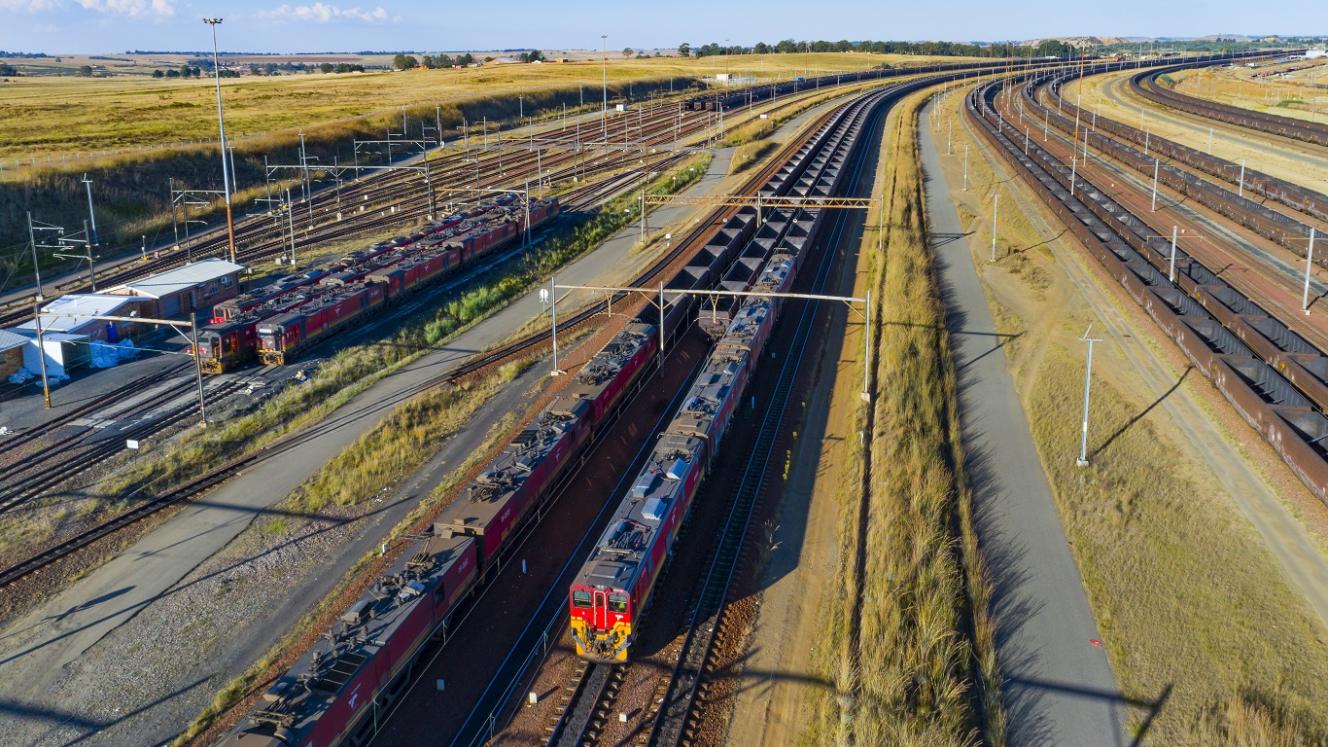
Spoornet ‘collapse’ a key issue ALAN PEAT SURVEYS estimate that the total cost of logistics and the supply chain in SA is somewhere in the order of 15% of our gross national product (GNP), according to Martin Bailey, MD of Industrial Logistic Systems. “Thus,” he said, “logistics contributes massively towards the functioning economy.” How well do we compare to the rest of the world? “According to logistics statistics,” answered Bailey, “not very well.” The total contribution of logistics and supply chain in Europe and America is typically in the order of 7 to 8% of GNP. This means that transport, storage and all other related factors in SA are relatively double that of the developed countries. The reasons are fairly complex, according to Bailey. “Our distances are fairly large and our major markets are inland far away from international transport routes,” he told FTW. “However, the US has many similar problems and thus we cannot use this as the only excuse. “Our economically active population is fairly sparsely spread and this also contributes towards high costs of transportation and distribution.” There are, however, many other factors influencing logistics costs –including the fact that the railway system for freight transport has largely collapsed. “We have not managed to keep up with the rest of the world to create intelligent, effective transport networks for general freight over rail,” Bailey said. “This means that we are using high-cost road transport to move goods over long distances.” How do we solve this dilemma? “Clearly there are real problems with the effectiveness of Transnet,” said Bailey. “While one understands that they are trying to stop excessive bleeding and huge losses, they also need to look at totally re-engineering the freight transport business to make it compatible with road transport. “Without huge changes to Transnet infrastructures (and massive capital spent) we are always going to have major long haulage transport network problems - which will always increase costs.” Meantime, government is simply not putting in the appropriate resources to facilitate world class supply chains. This includes ports, rail, airports and roads – along with appropriate tax benefits, duty free ports, and the like, as well as facilitating better training and education. “It is clear that there needs to be a total rethink by government,” said Bailey. “On the other hand, the private sector has also not put the necessary pressure on government to create proper supply chain infrastructures.” However, there is a growing recognition of the need to fix the problems. “Once people start understanding the country’s needs,” Bailey said, “we can begin to create solutions that bring down our supply chain costs and make us globally competitive. “To do this we need significant change in the way we look at the supply chain. This means effective co-operation between business and government - as well as a total change in attitude by government and private industry. “Global pressure will force us over the next 10 years to begin implementing new and better solutions that will benefit the country as a whole - rather than individual organisations.”
Global pressure will force down costs
Comments | 0
© Now Media. This content is protected by copyright and may not be adapted or republished. If you would like to discuss cooperation opportunities, please contact: editor@freightnews.co.za.