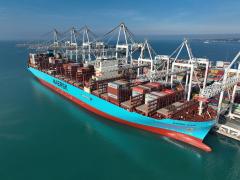
As sailing cancellations on the shipping world’s two main trades escalate, South Africa – like Africa in general – appears to have bucked the trend to some extent. According In the latest Logistics Executive Briefing for importers and exporters produced by London shipping consultancy Drewry, nearly 150 sailings were cancelled on the transpacific and Asia-Europe routes between October 2012 and February 2013. This due to an oversupply of tonnage caused by the prevalence of megaships entering the trade, and seriously reduced trade into Europe and the US in the economic recession. In South Africa there are void sailings, according to shipping executives, but not to the same degree as on the main trades – which are battered by severe overcapacity and heavily reduced cargo demand, leading to rates having been cut to ribbons last year, and returns at unsustainably low levels. There is also not the same overtonnaging problem on the SA trades. The Far East trade was the one that came the closest to such an undesirable situation at the start of the global recession, but one that was quickly adjusted – mainly by smaller lines amalgamating their services with others. But there have been cancellations. According to Iain McIntosh, regional sales manager for Mitsui OSK Line (MOL), his line has had “quite a number” of void sailings. Indeed, he added, this was the same with most of the other lines on the Far East trade. “It happened sporadically in the fourth quarter of last year,” he told FTW, “with congestion in Durban a contributing factor, forcing us to pull sailings out of the service to save down-time costs. “There was quite a number westbound after the Chinese New Year (in February), and this led to an overcapacity in March, and more void sailings. Also, cargoes were quite soft in February and March – this having most impact on the eastbound leg.” CAPTION The Safmarine Chachai en route to China ... South Africa – and Africa in general – have been less affected by cancellations with nearly 150 sailings cut on the transpacific and Asia-Europe routes between October 2011 and February 2013.
Global overcapacity scourge bypasses SA trades
Comments | 0
© Now Media. This content is protected by copyright and may not be adapted or republished. If you would like to discuss cooperation opportunities, please contact: editor@freightnews.co.za.