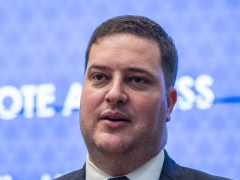
THE EVOLUTION of the freight forwarding industry has reached a stage where members of the trade are at previously unforeseen risk, according to Hugh Reimers of Eikos Risk Applications. “The freight agent has traditionally acted as an agent,” he told FTW. “Therefore he has – in the event of loss or damage to cargo in his “care custody and or control” – enjoyed the “contractual” protection embedded in the agency relationship as laid out in his standard trading conditions. “However, increasingly, and often without adequate forethought, these operators are morphing into “supply chain managers”. This puts them in a position where they are acting both as agents (in their traditional business) and as principals – to the extent that they offer warehousing, fine distribution, transport broking, and pick/pack solutions, for example. These new offerings even extend to chartering in some instances – procurement, credit control and managing a client’s sales team.” Exposures for forwarders are becoming significantly broader in scope. At one end of the range is the traditional and fairly (but never entirely) simple “liability to cargo”. At the other end of the scale is an environment where full responsibility is assumed, either tacitly or explicitly, for substantial levels of fire risk, stock shortage and crime risks. “All these related to goods that do not belong to them,” said Reimers, “and in which they can at best only have a contingent insurable interest.” A sound model for financing risk in this new business environment must be found, he added. “Current practice seems to be something of a double edged sword poised over the head of the supply chain manager as, not only does he have to show the cargo owner savings in the net cost of warehousing and distribution of his goods to get the business in the first place, but he is now also expected to “out-perform” the cargo owner in terms of his stock management. This can lead to the agent frequently being held liable for “unexplained” stock losses from a rand on upwards.” Some of these new exposures are uninsurable in the traditional insurance market, according to Reimers. “Precisely because, as the cargo owner has undoubtedly established over many decades,” he said, “a level of stock loss is INEVITABLE – irrespective of what systems are used or of the competence and professionalism of the warehouseman. “Little wonder then that cargo owners are rushing to leverage the benefits of modern day supply chain management, in many cases with little concern for the long-term sustainability of their service provider.” Traditional insurance solutions/providers are no longer capable of protecting the freight operator in this changing risk environment, Reimers reckoned, and a new purpose-designed, multi-class highly specialised risk solution (including some very new risk classes) is urgently needed. “Some risks of course will never be insurable (certainly not economically),” he said. “The freight operator (and the industry as a whole) needs to find the best insurance solution available, to design a contract around this solution (using specialist advice) – and then stand by these conditions of trade.”
Forwarders should wake up to broadening scope of liability
Comments | 0
© Now Media. This content is protected by copyright and may not be adapted or republished. If you would like to discuss cooperation opportunities, please contact: editor@freightnews.co.za.