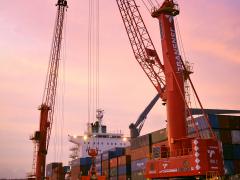
Reducing and then eliminating border post delays are the next objective for companies operating on the Beira Corridor, according to Christian Roeder, chief commercial officer J&J Transport. Problems at the borders have been highlighted by the removal of most of the infrastructural bottlenecks thanks to investment by port operator Cornelder, the port authority CFM, and the Mozambican Road Fund in the BeiraMachipanda highway. Larger vessels can now call on the port following the dredging of the approach channel and the upgrading of the handling facilities in the port, and there is a four-lane highway joining Beira to the Zimbabwean border. The private sector is continuing to invest in warehouse facilities in and around Beira to handle larger volumes of freight. “We now have the physical capacity to handle much larger volumes along the corridor, but the border post infrastructure and systems now need to be updated to ensure that the greater volumes of cargo can move smoothly and quickly. “Officials at border posts like Machipanda and Forbes do their best to alleviate congestion. “However, the customs departments need to update their processes, extend working hours and make their operations more efficient to handle the increase in volumes. “We need a seamless ‘international’ corridor approach to take us to the next level,” says Roeder. Transporters operating on the route and the port operator have started looking into various corridor initiatives to push this agenda. The Beira Corridor crosses borders at Machipanda/ Mutare in Zimbabwe, at Chirundu between Zimbabwe and Zambia, and at Kasumbalesa between the Democratic Republic of Congo and Zambia. A second corridor serves Malawi through Milange/ Mulanje or Zobue/Mwanza. Having seamless onestop border posts will help stimulate economic growth in the region and help businesses to grow during periods of political instability and uncertainty. “Despite the challenges we are cautiously optimistic. We will continue to focus on our internal processes to keep up with events on the ground and ongoing recruitment and training of local staff to improve our performance,” says Roeder.
CAPTION
We need a seamless ‘international’ corridor approach to take us to the next level. – Christian Roeder