Despite heavy rainfalls in
parts of South Africa, the
drought – and its long-term
impact – is far from over.
And government seems to
be turning a blind eye to
the logistics and production
output pressures experienced
by the agricultural industry,
according to an agricultural
economist.
“The government tells
us the drought is over and
the ports tell us they are
well-equipped to handle the
extra grain imports, but we
are hearing very different
accounts from the farmers
themselves,” said Professor
Johan Willemse from the
department of agricultural
economics at the University
of the Free State (UFS).
He told FTW that farmers
had told him there had
been backlogs at the ports,
resulting in delays of two
to three days in getting
imported grain delivered
during the second week of
April. “Despite assurances
to the contrary there are
real concerns about serious
backlogs in transporting
the imported grain – which
includes wheat, maize and
more – into the interior of the
country,” he said.
According to Willemse,
farmers/agri-producers
also don’t keep large stocks
of maize – which many
use for supplementing
their livestock’s diet – and
delivery is on a ‘ just-in-time’
basis. “There are serious
consequences to production
if delivery is delayed,” said
Willemse.
He added that there were
long-term effects of the
drought on agricultural
production that the “powersthat-
be” were also not
taking into account. He
therefore welcomed the
recent renewed call by the
Democratic Alliance (DA) for
government to declare the
drought a national disaster
after Malawi became the
latest Southern African
Development Community
(SADC) member state to
make the declaration.
“Take maize for example.
Farmers who plant maize
take a line of credit to
buy their crop inputs and
then pay the money back
after the harvest. With a
much-depleted harvest,
the producers are going
to struggle to pay back
the money they borrowed
against their initially
expected harvest. When the
next season rolls around,
they may not get the credit/
funds they need to replant.
And production will suffer
again,” explained Willemse.
Furthermore, white maize
stocks – mainly to feed
dairy cows – are depleting
rapidly and this affects
milk production. “Based on
our department’s research
and the other factors
listed above, it could take
two to three years for the
balance to be restored,” said
Willemse.
Transnet Port Terminals
(TPT) announced earlier
this month that it had set
up a task team to prepare
its facilities for the 7 million
tonnes of grain that would
be imported – the country’s
biggest grain import in
seven years.
Devina Vijiam, a senior
manager for strategic
projects at TPT, said in a
statement: “Transnet is
committed to handling the
entire over-the-border and
domestic cargo through our
facilities.”
INSERT & CAPTION
There are serious
consequences to
production if delivery
is delayed.
– Johan Willemse
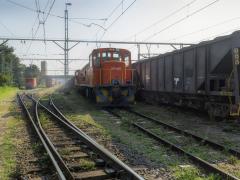
CAPTION: This photo was taken on a maize farm near Wesselsbron in the Free State last month. Photo: UFS