Long-haul road freight in Zimbabwe continues to be flagged for the same recurring issues – 100% scanning of cargo crossing borders like Beitbridge, the lack of infrastructural capacity to implement rigid anti-smuggling efforts, and the ultimate cost passed on to industry.
And the more these non-tariff barriers (NTBs) are escalated to the relevant authorities, especially the Zimbabwean Revenue Authority (Zimra) and the Office of the Presidency, the more they seem to be ignored.
At least that’s according to Mike Fitzmaurice, chief executive officer of the Transit Assistance Bureau.
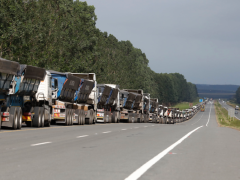
He said over the Easter weekend a transporter was stopped outside Harare on Good Friday, April 3, and referred to ‘Back Storage’, the facility used by Zimra to refer trucks intended for anti-smuggling inspection.
When the truck got there the driver was told that the staff required to do the necessary inspection were not available, due to the long weekend.
To make a long story short – the truck and its cargo were delayed until Tuesday when the driver finally left Back Storage to complete his delivery.
And the cost to industry?
Roughly US$550 per day, said Fitzmaurice, who also serves as sub-Saharan vice-president for the Union Africaine des Organisations des Transports et de la Logistique.
Asked what the driver had to do, he said it was anyone’s guess but, considering that the transporter in question was a regular operator in Zimbabwe, he was probably a local and had somewhere to stay until April 7.
Being a ‘regular operator’ is at the centre of Fitzmaurice’s frustration.
“This shouldn’t have happened in the first place. If intelligence gathered by Zimra was shared with the anti-smuggling Task Teams they would’ve seen that the truck in question belongs to a complying operator and there was no need for involving this company in random checking.
“The problem is that the two don’t talk to one another. The Task Teams fall under The Presidency and all they want to do is fill their daily quota. So, they pull over whoever they want to.”
It’s not the first time that Fitzmaurice has made a case for post-audit clearance efficiencies, where cargo clearing by law-abiding operators can be a fit-for-purpose solution against smuggling.
But that would be in a perfect world.
In a perfect world, the country’s Beitbridge border with South Africa could also be better run, Fitzmaurice said.
The infrastructural upgrade of a few years ago, estimated at between US$160m and $172m, was supposed to have driven down waiting time at the border to about three hours max.
“That was the mandate on which the $200 border access fee was marketed on. That was initially, but everything gets scanned for smuggling and eventually referred to ConDep (Container Depot),” Fitzmaurice said.
Problem is, Beitbridge doesn’t have the physical capacity for flagging all incoming trucks.
“They have 12 inspection bays at the border itself and another four at ConDep. With 100% scanning and staffing often being an issue, traffic frequently builds up and cost is eventually borne by operators,” Fitzmaurice said.
He explained that if Beitbridge wasn’t such a waiting worry for industry, operators would gladly pay the $200 in concessionary costs.
“But transporters don’t want to use the border because what should’ve been a dream crossing has become another NTB transit where delays can last for a day or more.”
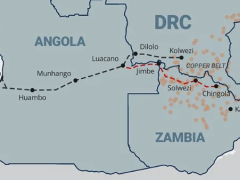
As a result of all the issues in Zim, back-haul trips from the Copperbelt in Zambia and the Democratic Republic of the Congo are now also rather heading for the Kazungula border into Botswana.
It used to be that Copperbelt traffic would take the Botswana bypass going north and make a beeline through Zim heading back south, “but not any more,” said Fitzmaurice.
“Now they all head to Kazungula and Groblersbrug,” South Africa’s N11 border with Botswana.
“It’s unfortunate because it doesn’t have to be like this. Trucks transiting through Zimbabwe could be a serious revenue generator for Zim but then they need to create an environment that’s conducive for trade,” Fitzmaurice said.