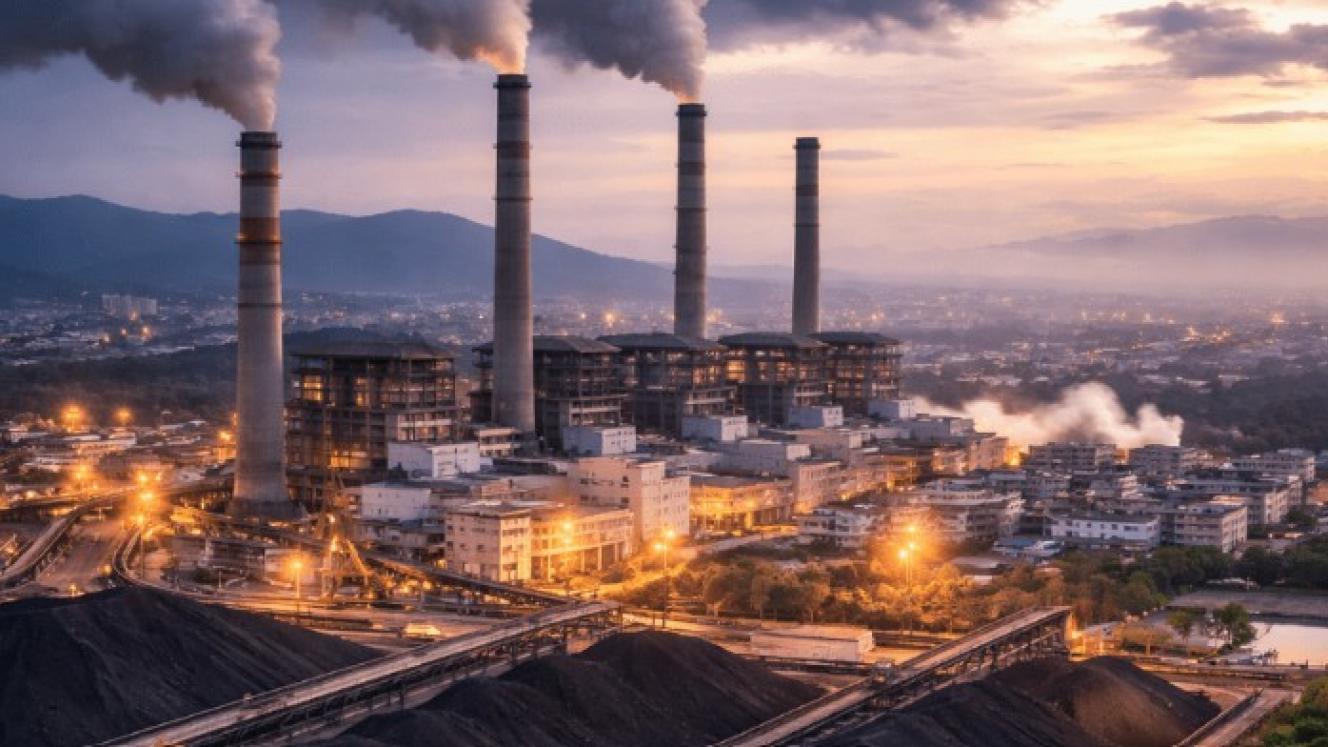
Coal is finding renewed traction in economies across the globe, many of which previously relied on liquefied natural gas (LNG) shipments for their energy requirements.
Moreover, coal exports aren’t affected by the Persian Gulf conflict and the crude and gas crisis that has unfolded ever since Iran decided to close off the Strait of Hormuz.
According to Beijing private equity firm, Arbre Capital Group, the price of coal has increased by 13% since the United States and Israel decided launch its military campaign on February 28.
Sensing an impact on its own supply because of China’s alternative energy demand spike, Indonesia is tightening up on outflows while the spot price for coal rose to US$134 per tonne on the open market.
Asia Shipping Media (ASM) reports that Japan and South Korea, which typically lean on LNG for peak demand, are ramping up coal-fired generation to maximum capacity, while China and India are leaning harder on domestic coal reserves to protect their grids.
Argus Media in London has reported that the Middle East war and attacks on facilities at Ras Laffan have curtailed Qatar’s LNG‑export capacity, tightening world‑scale supply and pushing many Asian utilities to increase coal burn where LNG is no longer available or affordable.
Renewed demand for high-calorific-value coal has also been confirmed by British shipbroker and financial advisory firm, Braemar.
ASM reports that coal-price assessor and market-intel service, McClockey, has found that the price response has been sharpest in Australian high-cv thermal coal, recorded as $138-140 per tonne – its highest level since 2024 and nearly 20% above pre-war levels.
“The spread between Australian high-cv coal and Indonesian mid-cv coal widened from $30.5 per tonne on February 27 – the day before war broke out – to $50 per tonne by March 20,” ASM reports.