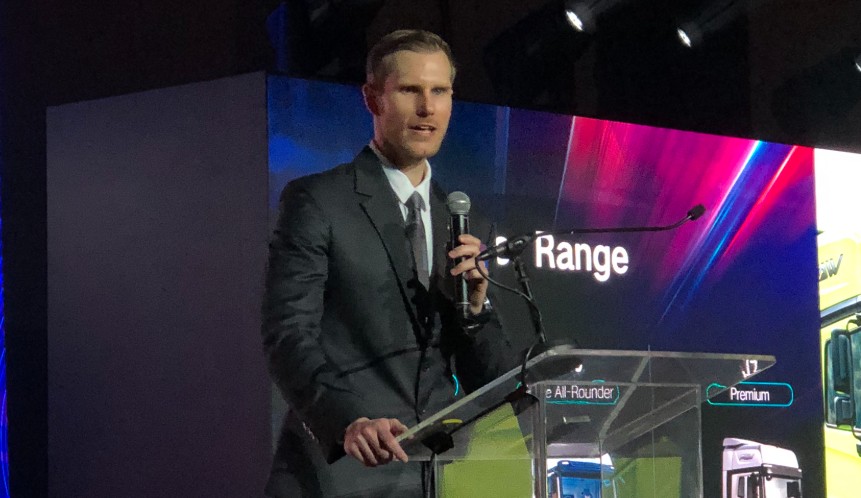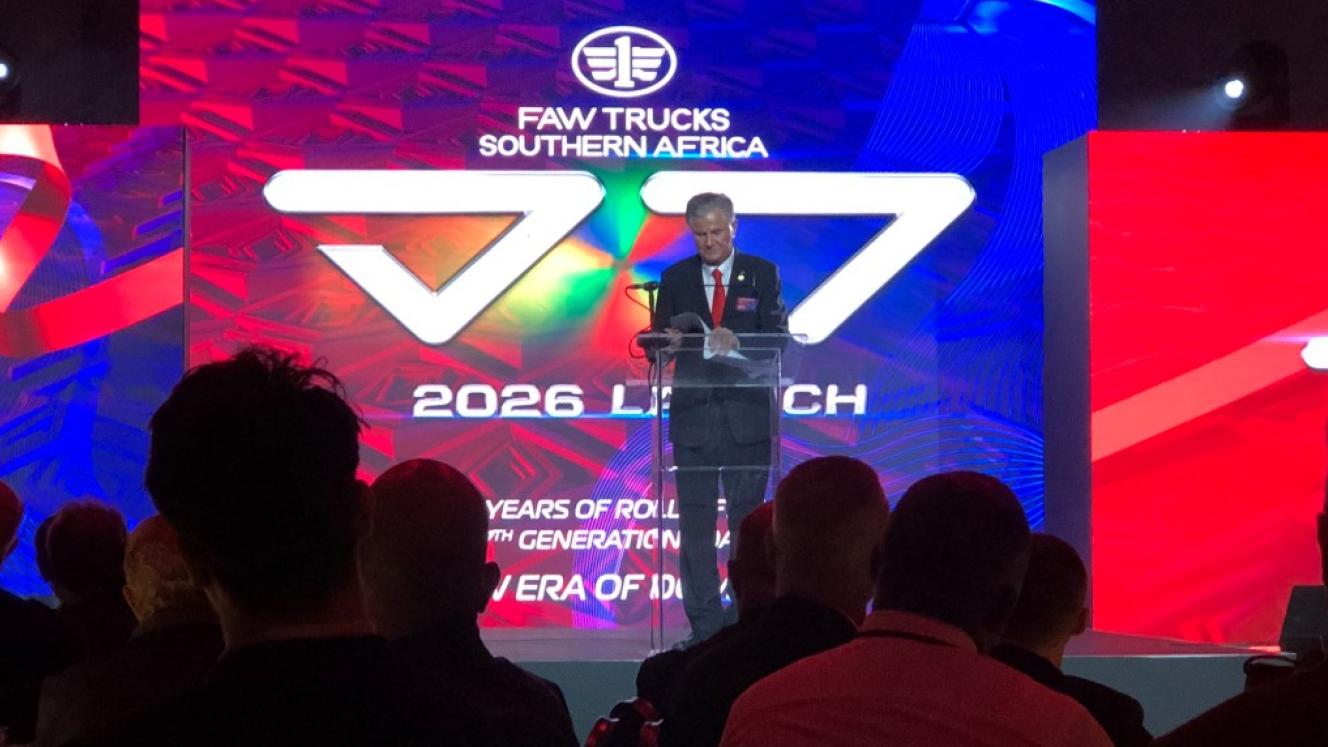
China’s oldest original equipment manufacturer (OEM) of cars and trucks, FAW, has embarked on an aggressive marketing strategy to launch its latest mechanical horse, the J7, a diesel-powered truck that meets Euro-V and Euro-VI emission standards.
First entering the Asian market back in 1953 as the Jiefang CA-10 four-tonne truck, FAW is a relative newcomer to the South African market and its first local buyer, Richard Leiter, is today also the OEM’s executive director in southern Africa.
Although only entering the local market in 1994, FAW has fast established a foothold for itself among fleet managers and transporters.
Addressing a packed gathering at The Galleria in Sandton on Tuesday evening, Leiter said FAW had become a market leader.
“Over the last 18 months we have become number-one.”
Claims such as these have become commonplace in the ever-competitive truck sales market, where brand representatives constantly jockey against one another over price, performance, and related market metrics.
But Leiter’s claim is backed up by strong corroboration.
Last June the Automotive Business Council (Naamsa) said that the local road freight industry had recorded 1 943 heavy commercial units sold and, although it represented a 3.1% year-on-year decrease, FAW scored a win by outselling its competitors.
FAW, the Council said, had sold 450 units compared with its nearest rivals, Toyota (315), Isuzu (296), and Scania (214).
According to Leiter, FAW’s sales success remains based on the first message it had for the market: “We wanted to introduce the most affordable truck in Africa.”
Joshua Fourie, the company’s general manager for commercial operations, said the J7 had arrived at a time of extreme tumult in the market, especially given the impact of the Middle East conflict and related diesel costs.
Coming on the back of South Africa’s highest diesel-price increase on record – R7.51 per litre (p/l) – he said the market was seeing “constantly increasing transport costs”.
Ahead of Tuesday’s launch, as local consumers were still on tenterhooks about what fuel prices would be increased to, Road Freight Association chief executive Gavin Kelly said the anticipated diesel price increase was going to hit consumers hard.
He said about 35-55% of transportation costs were absorbed by operational expenses, and that operators had no alternative but to eventually pass the pain on down the pipeline to the man on the street.
Kelly added that, although it was expected that the government would work relief into the price shock, which it had through a levy cut and avoiding a diesel price increase of more than R9 p/l, “it remains to be seen what happens next month and the month thereafter”.
“The longer this thing (the Persian Gulf conflict) drags on, the more it could affect transporters; the more it could end up costing consumers.”
But Fourie made the argument that the level at which transporters could pass on costs remained limited, and that affordable reliability should be a crucial strategy to fleet managers and smaller operators striving to keep costs down.
“Over the last 10 years we’ve seen a 60% increase in transport costs.
“The ability to pass the cost line is very limited.”
More and more, he said, it came down to how much truck you were getting for what you were spending.
Leiter and Fourie believe it is the OEM’s total cost of ownership – a know buzz phrase in the market – that has given FAW a sales edge in the market.