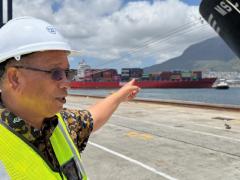
Europe-based companies are increasingly focusing on sub-Saharan Africa as opportunities in their own back yards diminish in the aftermath of the financial meltdown of 2008. “Because European markets have declined so badly companies in Europe that never had any interest in doing business in sub-Saharan Africa in the past now want a piece of this pie,” says Whitehouse & Associates researcher Duncan Bonnett. “We do a lot of business in Spain and most of these Spanish companies are industrial. Their export market accounts for 60-80% of their total sales and the bulk of that used to be destined for France, Germany, Italy, the UK and Portugal. Now that those markets have gone sour they’re already doing business in North Africa and are keen to start looking at sub- Saharan Africa – especially into countries such as South Africa, Angola, Nigeria and Mozambique. “So people who say we have to concentrate on competition from Asia are a step behind – they don’t realise that right now European countries are suddenly waking up to the opportunities here. They may not be price-competitive with the Chinese but they certainly offer other advantages in terms of quality, skills and after-sales service.” It’s also not all about minerals and metals, and the perception that South Africa is ideally placed as an entry point into the rest of Africa is rapidly being eroded, says Bonnett. “It’s something that government and business leaders must start taking formal cognisance of. A company in France, for example, that has a subsidiary in Tunisia would rather use the Tunis office to get into Central and West Africa than SA. “And while European companies are moving in, too many South African companies would rather compete in Europe than in our neck of the woods and are not developing these markets.” No-one can escape the truth that Nigeria will grow 10% this year, Uganda and Ghana will grow 10-11% once oil starts flowing, and so will the likes of Mozambique with all the coal deposits. “In many respects we’ve been left behind in our own backyard – largely because of the many misconceptions about the continent,” says Bonnett. “People feel the rest of the continent is too difficult to do business in – it’s too corrupt, there are too many backhanders and it’s too expensive.” But while there are realistic barriers and the cost of doing business is high, the biggest barrier is ignorance. “A lot of companies don’t understand the size of the markets – either grossly over- or underestimating them. And they don’t understand the dynamics. “South Africa has a very different drumbeat to the rest of the region and the rest of the region doesn’t suffer the same way South Africa does. In many respects for South African manufacturers the rest of the region helps us out – absorbs some of our overflows when our domestic market contracts.” The sooner we capitalise on this, the better.
Europe tunes into growing opportunities in Africa
Comments | 0
© Now Media. This content is protected by copyright and may not be adapted or republished. If you would like to discuss cooperation opportunities, please contact: editor@freightnews.co.za.