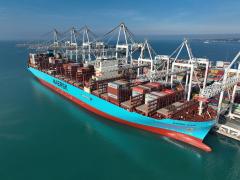
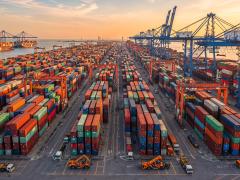
Innovation will continue to drive Maersk over the next 10 years, says Maersk Line SA managing director David Williams. “Maersk has positioned itself as being at the cutting edge. We’re always looking at ways in which we can improve things. It’s entrenched in our culture.” An example of this innovation is in the area of environmental responsibility. “Maersk is aiming to lead the way and reduce our CO2 emissions by 25% from 2007 to 2020. We were also the first line to receive independent CO2 verification. It’s a high priority for us.” The impact of shipping on the environment is a key focus for the entire industry, says Williams. “From biofuel tests, fuel with 0% sulphur dioxide and fuel switches in ports to improved technology in reefer containers and the type of paint used on hulls and propellers, Maersk Line is raising the bar. Maersk’s appetite for innovation extends to its use of new technologies like its Aqualifedesigned reefer containers that are able to move live seafood by container ship, helping to lower the cost of this fresh seafood, but also reducing the environmental impact of transporting seafood by air. Meanwhile Maersk’s StarCare Controlled Atmosphere container keeps fruit fresh for up to 50 days. E-commerce is another focus for Maersk as the company’s Maerskline.com provides a user-friendly platform for the shipping line’s customers. “At least 85% of our bookings are done online, 90% of our shipping instructions and 65% of our bills of lading. Our aim is to have booking with Maerskline.com as easy as buying a book from Amazon and we predict that within the next decade we will almost exclusively use electronic platforms, enhancing our overall customer experience end-to-end.” In the future, Williams expects increasingly larger vessels to enter the market. “The average size of newbuilds in 2005 was 3 600 TEUs. By 2012 the forecast for newbuilds is expected to be 7 000 TEUs. Larger vessels will start calling on South Africa and our ports will need to adapt to work with this size.” On time delivery will be a core focus for Maersk, says Williams. “Port infrastructure capabilities need to facilitate this, but South Africa is still lagging. “All elements have to be productive and efficient to cope with larger vessels and growing trade, including landside operations. Rail capacity for example is limited and there’s congestion in Durban and at City Deep.”
Environment ‘high priority’
Comments | 0
© Now Media. This content is protected by copyright and may not be adapted or republished. If you would like to discuss cooperation opportunities, please contact: editor@freightnews.co.za.