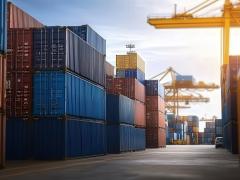
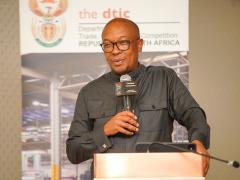
A decision by Transnet to place all terminal operations in the province under one umbrella has resulted in the ports becoming much more integrated into economic development in the province, says Siyabulela Mhlaluka, Terminal Executive Manager Eastern Cape Terminals. The strategy was implemented when Transnet moved away from centralised management for each of the terminal operations. Looking back after a year at the helm of the division which he has headed up since it was formed, Mhlaluka says “much has been achieved over the past year because we have been able to focus on the Eastern Cape as a region. Our ports are unique, and we have been able to align our operations and investment to meet the needs of the region. “We understand and complement the role the ports play in ensuring the success of provincial and local government economic development programmes.” Transnet has also signed a memorandum of understanding with the Eastern Cape government to help develop the province’s economy. “We are seeing a greater collaborative spirit between local government, national government and Transnet. That is a good thing,” he says. Economic development is close to the heart of Mhlaluka, who is past president of what is now the Nelson Mandela Bay Business Chamber (formerly Percci). Trading and export-based economies such as that of the Eastern Cape are reliant on the efficiencies of their ports, which are the main gateways for imports and exports. Mhlaluka is proud of the Eastern Cape Terminals team, which continues to raise the productivity bar and ensure that there is sufficient capacity to facilitate trade. “Starting in East London, we are experiencing growth in vehicle volumes, while containers are stable. “On the bulk side, maize exports are also growing. “Moving down the coast, Ngqura has done wonders for us. Volumes have exploded beyond our expectations and the projections of the shipping lines. “Our team has responded by constantly improving productivity. In July, we averaged 30 moves per gross crane hour (GCH) – up from 22 when the port opened. Our target is 32 by the end of the year. “The Port Elizabeth container terminal is doing well despite the fact that the equipment is due for replacement. In September operators reached 28 GCH, and the average is 25 GCH. “These efficiencies are being achieved despite adverse weather. In addition to winds, both ports have been experiencing unusually strong currents at the quay walls. Both ourselves and Transnet National Port Authority are trying to identify the cause so that we can take remedial action. “In the meantime, one solution has been to work more carefully and therefore more slowly to ensure that work continues safely on the vessels and delays are kept to a minimum.” Productivity records are also being set at the Port Elizabeth car terminal, with an average handling rate of 200 units an hour during August – a record month in which 17 445 vehicles were exported and imported through the port. Year-on-year, the August to August vehicle volumes through the port have grown by 11% (66 539 to 74 239). Manganese exports are heading towards the 5.5-million tons-ayear capacity of the Port Elizabeth terminal. Mhlaluka is keen to see capacity increased in order to cater for the smaller mining companies. “There are serious constraints in our ability to cater for the smaller mines, and they are having to send ore out by container through Ngqura,” he says.
EC Ports – gateways to opportunity
Comments | 0
© Now Media. This content is protected by copyright and may not be adapted or republished. If you would like to discuss cooperation opportunities, please contact: editor@freightnews.co.za.