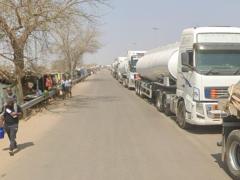
Domestic instability does not bode well for South Africa’s trade environment, especially in light of the country having reached a cumulative trade deficit of R86.1 billion for 2012. Economists have warned that the continued instability in the mining sector, talks of nationalisation, ongoing labour strikes and increased electricity prices are impacting negatively on the economy, creating a business environment best described as unstable. “Business does not handle instability well,” said Busisiwe Radebe, an economist with Nedbank. “In light of the ongoing global economic turmoil we have to be very watchful of what happens domestically. It is impacting the country negatively.” She said while South Africa’s imports, despite a slight decrease in the figures, remained relatively stable, the country’s growing cumulative account deficit was a major concern. This was due to the massive decline in exports. “A year ago the cumulative deficit was only around R5 billion. In September it had already reached R86.1 billion. At Nedbank we are forecasting that the current account deficit as a percentage of gross domestic product will be more than 5% compared to the 3.3% it was last year.” All of this continues to turn sentiment against the local currency – and while exports in theory should be supported by a weaker rand this is not happening. “South Africa does not operate in a vacuum and we need to be cognisant of what is happening internationally,” said Radebe. “At the same time we need to address issues domestically that are increasing instability and affecting our economic growth.” With the global economy expected to remain weak for at least several more years – the IMF expects global growth to be around 3.3% in 2012 – South Africa can ill afford the wild cat strikes that have plagued its mining industry or the prolonged violent strikes of the road freight sector, while electricity increases continue to impact on cost as well. According to FNB chief economist Cees Bruggeman, the labour unrest and strike action especially has had an intimidating impact on private business expectations, with business confidence remaining disappointingly low. Added to National Treasury forecasts of growth in developed countries remaining below 1.5% this year and next, while developing countries will grow between 5 and 5.5% per annum, the country needs to pull out all the stops to remain competitive. “In the euro area, which remains South Africa’s most important export destination, it is expected to contract by 0.4% this year and only grow by 0.2% in 2013,” said a spokesman for the Treasury. “At the same time growth has slowed in China and India. This has also affected the South African economy through lower commodity prices and slower growth in trade.”
Domestic instability worsens less-than-rosy outlook
Comments | 0
© Now Media. This content is protected by copyright and may not be adapted or republished. If you would like to discuss cooperation opportunities, please contact: editor@freightnews.co.za.