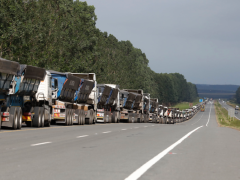
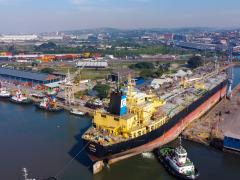
South African fruit exporters are considering chartering conventional reefer tonnage out of Cape Town following a disastrous peak season where wind played havoc with shipping schedules. With the Cape Town Container Terminal (CTCT) coming to a near standstill during December, January and parts of February due to heavy winds, exporters faced near disaster as perishable products could not be exported. Vessels were unable to berth due to heavy winds and many shipping lines bypassed the port completely to ensure they stayed on schedule. The result was minimum reefer capacity during the peak summer season, while several vessels were delayed for long periods as the port remained closed. At the second African Cool Logistics conference in Cape Town recently, major fruit exporters such as Dole and Capespan called for dedicated reefer vessels to move their product, saying they were willing to charter these vessels. Deon Joubert, general manager of operations for fruit producer Capespan, said the industry was competing internationally and could not afford to have its product delayed as was the case during the recent peak season. During November and December alone the port was closed for a total of 40 days while January did not see much of an improvement. Joubert told delegates at the conference that creating enough volume for a dedicated reefer vessel was possible if major shippers collaborated on a shared reefer service. Mike Newton, regional manager for IPL Southern Africa, agreed, saying the delays at the port cost the company a lot of money. “We felt the pain controlling the supply chain during the recent peak season where the port was windbound and product was not moving. It cost us a lot of money as we had to make contingency purchases and the suppliers in Holland saw us coming,” he said. “We not only lost quality and shelf life, but there was also the impact of a loss of sales. When it comes to perishables, shippers need very dependable, regular, consistent weekly shipping arrivals and departures.” But shipping lines have placed the blame squarely on the shoulders of Transnet Port Terminals, terminal operators of CTCT. Iain McIntosh, general manager of sales for Mitsui OSK Lines, said shipping lines and shippers were going to have to work together to find a solution as they were just as affected by the delays caused by the port closing down. “There was much greater down time in January this year than ever before while winds were no worse or better than previous years. The finger points directly at the equipment that Transnet has put in place at the port,” he said. “We now have a situation where the port has installed new quay cranes, which are very efficient, and then backs them up with rubber tyre gantries, which are not. The RTGs kick out at 65km per hour and in January it had disastrous effects,” he said. “ Andy Connell, Dole business unit manager for shipping and logistics, said it was imperative that Transnet invested in alternative handling technology as it was essential that the quayside equipment worked hand-in-hand with the stack equipment. INSERT ‘A dedicated reefer vessel is possible if major shippers collaborate on a shared reefer service.’ CAPTION Iain McIntosh ... lines and shippers must work together
Desperate CT perishable exporters consider charters
Comments | 0
© Now Media. This content is protected by copyright and may not be adapted or republished. If you would like to discuss cooperation opportunities, please contact: editor@freightnews.co.za.