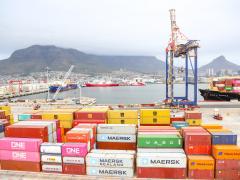
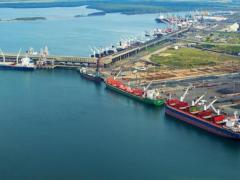
RAY SMUTS TRANSNET’S LATEST port tariffs hike is once again not linked to productivity increases which, to Flemming Dalgaard’s way of thinking, is not on. It is difficult to continue accepting annual increases without significant improvements in the ports, says the MD for Maersk Sealand in South Africa and one of the many who read about the new National Ports Authority and South African Port Operations increases in the media at the same time official notification arrived in the post. This manner of communicating with customers is not in the spirit of “intra-dialogue” agreed to last year by the lines and port players, he says. Referring to Sapo’s 5.7% increase on container handling, he says: “We have a very good dialogue with Sapo and have said we can agree to pay more but it must go hand in hand with productivity improvements. If it does not do that, all we can do is pass the increase onto our customers and this is obviously what we would like to avoid.” Confessing to being “less unhappy” about the overall position in the container terminals due to a “slight” productivity improvement, he says the situation is not where it should be. “It is still way below world standard - Durban achieving 18-19 moves per crane hour and Cape Town much the same - specifically because you don’t get sufficient cranes or faster chassis operations landside.” He says while Hong Kong may be an extreme comparison, the port is achieving 100 moves an hour and Singapore even more. Even in Madagascar, using ship’s rather than gantry cranes, 25 moves per hour is achieved. “Either Sapo should say ‘we are going to increase the tariff by 3% or we guarantee you an efficiency gain of 5% or 8%’. Then we could absorb such an amount generally and our customers here would not have to feel any effect.” Dalgaard says customers would obviously be unhappy by any tariff increases, because a global shortage of containerships will be experienced until at least 2007. “Supply of new ships is growing by an estimated 10-11% annually, but the market by11% and this does not take imbalances in trade lanes into consideration. Additionally an average 2000 teu (nominal) used to cost around US$12 000 a day to charter. The current price is US$27000 to US$30 000 a day, and charters are more often than not for a minimum of three years. “So South African consumers are hit by tariffs going up, and ship charters and the oil price have become much more expensive, which is why we maintain, in the interests of our customers, that we need to see productivity increase in the container terminals.”
Dalgaard calls for productivity-linked increases
Comments | 0
© Now Media. This content is protected by copyright and may not be adapted or republished. If you would like to discuss cooperation opportunities, please contact: editor@freightnews.co.za.