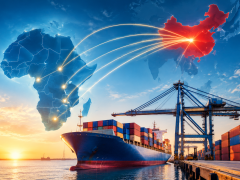
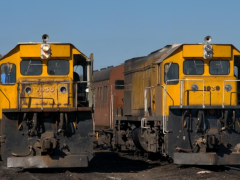
Gauteng business will have to become more proactive in clearing cargo in light of the new customs bills that require all goods be cleared at the first port of entry. According to Alex de Bruyn, national marketing manager for MSC, while the new bills are not specific to Gauteng, the province will be directly affected. “The new customs requirements will force the industry to be more proactive in clearing to prevent delays and consequential costs at POD,” he told FTW. The new customs bills, while not yet operational, are aimed at creating a balance between customs control and trade facilitation, creating an environment where the movement of goods is controlled and risk is minimised, protecting the country’s fiscus, economy and wider society at large. And with Gauteng being the economic hub for the country, responsible for at least 40% of South Africa’s containerised imports and exports, either physically shipped into or out of the region, it has a major strategic role to play. “Gauteng does not have specific challenges, but strikes have been impacting on the province’s performance this year, negatively affecting both import and export volumes,” said De Bruyn, “It also remains far from the nearest port and continues to face transport challenges – via rail or road – to connect it efficiently to the coastal ports.” He said servicing Gauteng remained a priority for MSC which continues to introduce new services to the South African market as a whole – such as the Ipanema Service, a direct sailing on the South Africa-South America route. “Gauteng plays a strategic role and it is therefore important to continuously work towards better wet and dry leg container solutions for the Gauteng market that are personalised and tailormade,” he said. “This requires substantial investment in both professional on-site personnel and infrastructure assets for the region.”
Customs bills a game-changer
Comments | 0
© Now Media. This content is protected by copyright and may not be adapted or republished. If you would like to discuss cooperation opportunities, please contact: editor@freightnews.co.za.