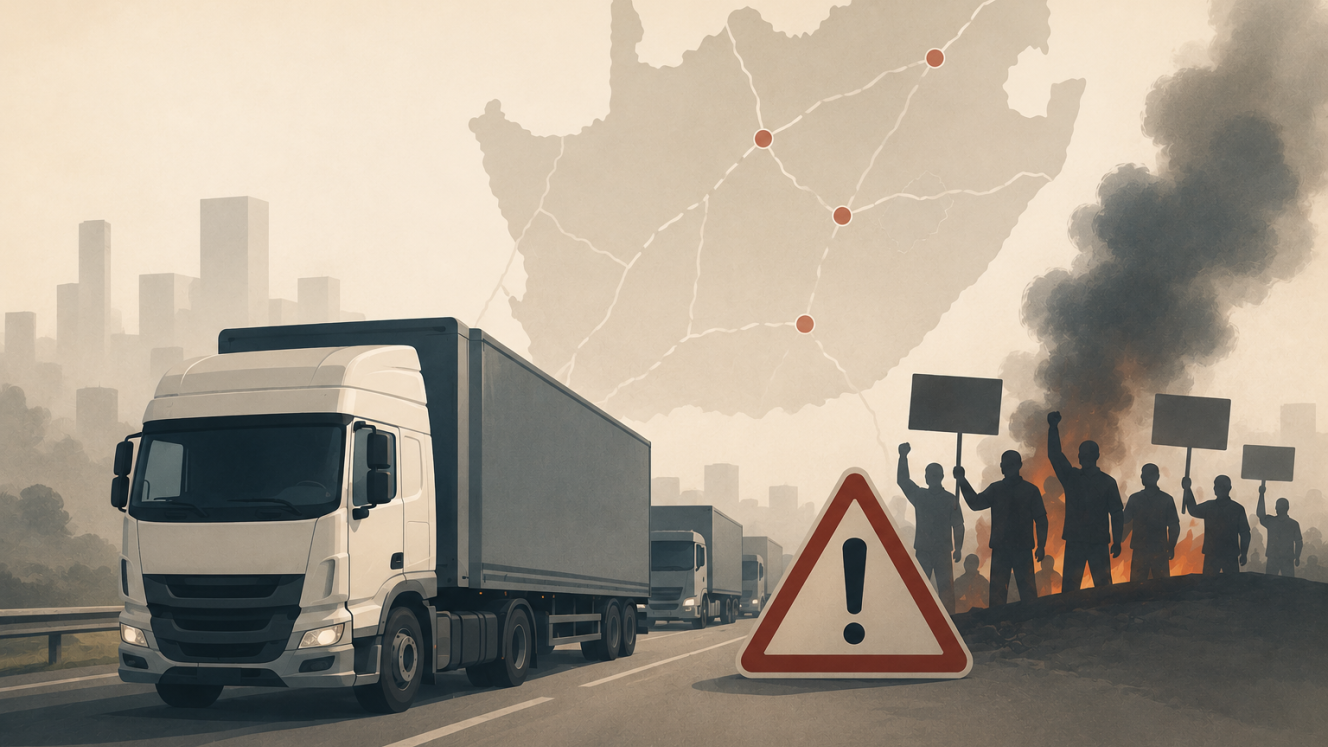
Truck queues of up to 17 kilometres, resulting in week-long delays, turned an African beacon of One-Stop Border Post (OSBP) efficiency into one of the continent’s worst corridor crossings in the sub-Saharan region.
To make matters worse, the Kazungula OSBP across the Zambezi River between Botswana and Zambia is probably one of Africa’s most important transits, carrying most of the supplies heading to the Copperbelt in Zambia and the Democratic Republic of the Congo (DRC).
On the backhaul, a significant amount of copper and cobalt – up to 70% of global demand for smart tech battery manufacturing in respect of the latter commodity – is exported via hinterland linkages supported by Kazungula.
But a glitch in the Automated System for Customs Data (Asycuda) had caused “severe congestion at Kazungula” over the past week, the latest Cargo Movement Update (CMU) reported on March 20.
The CMU, compiled by the South African Association of Freight Forwarders and Business Unity SA, confirmed that the Asycuda outage had also affected other Zambian borders.
Normalisation of the issue towards the end of the week was followed by more non-tariff barriers preventing smooth supply chain movement into and out of Zambia, a transit country for the DRC where the lion’s share of Copperbelt commodities originate.
According to Mike Fitizmaurice of the Transit Assistance Bureau, by Friday Zambia was grappling with a serious fuel shortage.
Also impacting cross-border cargo was scanner unavailability at Chirundu, another important crossing into Zimbabwe, which is battling to reattract corridor cargo because of a difficult road freight environment in that country.
Fitzmaurice said only steel and sulphur not subjected to scanning could go through the backlogged border on the North-South Corridor.
Additional corridor issues reported by the CMU included “rain-related road closures in Botswana and a prolonged power outage at Beitbridge, which halted processing for much of Thursday”.
Asycuda failure in Zambia followed in the wake of the recent Payment Registration Numbers (PRN) issue by the country’s tax authority, causing transporters to wait in similar queues, essentially nullifying the benefits cross-border operators are supposed to have at OSBPs such as Kazungula.
It also impacted the country’s Nakonde border into Tanzania to the Port of Dar es Salaam, at the moment the most important corridor for Copperbelt cargo.
Fitzmaurice confirmed that the PRN issue had since been resolved.