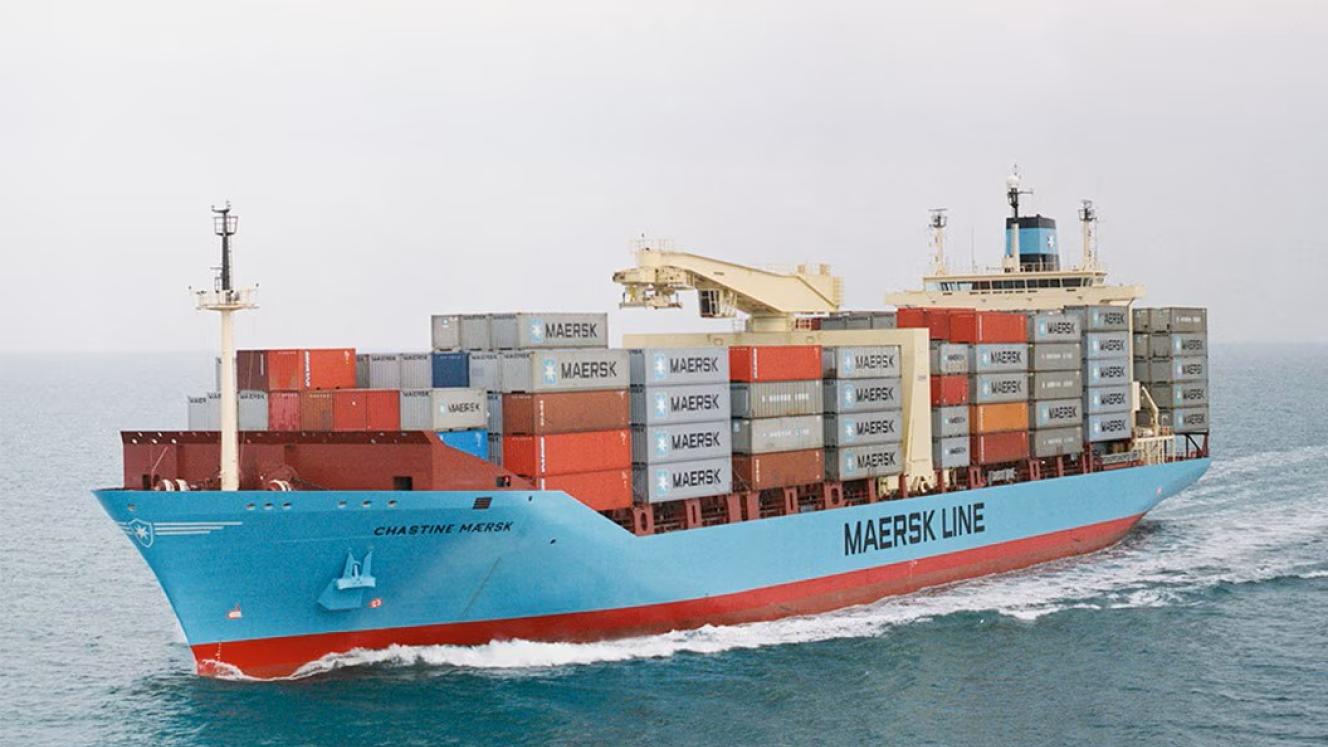
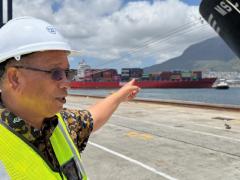
Namibia is building its economy around its strategic position as a gateway to Southern Africa – with the focus on three transport corridors, says Johny Smith, business development executive of the Walvis Bay Corridor Group. Investment in the port of Walvis Bay, as well as the Namibian road and rail infrastructure, is paying off. Smith says traffic along the corridors is “still growing,” despite the economic downturn. This was confirmed by various logistics and freight companies interviewed by FTW in Namibia. Shipping lines are adding to the success of the three main corridors – the Trans-Kalahari link through Botswana to Gauteng, the Trans- Caprivi to Zambia, and the Trans- Cunene to southern Angola. A fourth corridor, the Trans-Oranje, links the Port of Lüderitz with the Northern Cape province. “We now have regular calls at Walvis Bay by Maersk, Safmarine, MSC and CMA CGM,” says Smith. Further expansion of the port is under way to accommodate the growth in shipping. Smith says Walvis Bay is developing as a distribution centre for Southern African Development Community (SADC) countries. “We are going after big brands to establish their distribution centre in Walvis Bay,” he says. Future growth of the port will be made possible by desalination plants and a coal-fired power station, both of which are in the feasibility study stages, he says. The attraction of Walvis Bay is its geographic position in relation to Europe and the Americas, as well as the logistics routes into the SADC region, with its 220 million consumers. “We are three or four days to Lusaka, and four or five days to the Copperbelt,” he says. Luanda can be reached in three days, transporters told FTW. Neighbouring Zambia, Angola, Botswana and South Africa have also recognised the importance of the Namibian gateway, and have invested in roads, customs and other infrastructure on their side of the border. The corridors are also expanding, with a branch through Zambia to the Democratic Republic of Congo (DRC). This follows a meeting in September 2008 of representatives from the Namibian, Zambian and DRC governments. Namibia’s rail line to the border with Angola may also soon be extended by five kilometres into Angola itself to provide seamless transport for containers from Walvis Bay through into Angola, says Smith. This is expected to be completed by 2011. This is part of a long-term vision. There are over 20 medium and longterm projects in the pipe-line to ensure that the Namibian economy continues to benefit from trade and logistics – even once the ports and land links in Angola have been modernised, says Smith.
Corridors lay future foundations for Namibian economy
Comments | 0
© Now Media. This content is protected by copyright and may not be adapted or republished. If you would like to discuss cooperation opportunities, please contact: editor@freightnews.co.za.