Upgrading work to six of South Africa’s land borders will start before the end of the year following the successful conclusion of a public-private partnership (PPP) bidding process, Border Management Authority commissioner, Dr Michael Masiapato, has said.
With the exception of Lebombo on the N4 Maputo Corridor into Mozambique, the borders are with landlocked trading partners – Beitbridge (Zimbabwe), Kopfontein (Botswana), Oshoek (Eswatini), as well as Maseru and Ficksburg (Lesotho).
Masiapato said it was encouraging that the planned upgrades by the Department of Public Works and Infrastructure, for which requests for proposals were issued back in 2023, were finally going ahead.
He added that the infrastructural upgrading of Ficksburg could not be shifted to another border such as Groblersbrug on the Copperbelt Corridor into Botswana.
This is despite the cross-border road freight industry’s protestations that there is a pressing need to urgently improve transit capacity at the frequently congested Limpopo River crossing, compared with the much lower volumes going through Ficksburg.
“We never anticipated that Groblersbrug would become so busy,” Masiapato said, commenting on the general trend for transporters to avoid Beitbridge because of costs and transit challenges encountered in Zimbabwe.
Although it was a consideration of the BMA’s to shift upgrading work at Kopfontein to Groblersbrug, the suggestion was turned down by the DPWI.
“The technical people said it can’t be done because planning for the upgrades had already been finalised,” he said.
“Environmental and socio-economic impact assessments and design work have all been concluded.”
He stressed that transporters serving the Copperbelt bypass through Botswana to Zambia and the Democratic Republic of the Congo should take comfort from speeded up processes by National Treasury.
“The good news is, it is no longer going to take 10 years,” he said, about the time that has lapsed since the necessity for upgrading trade-heavy land borders were first mooted.
“Treasury has refined the processes for PPP. They have relaxed the bureaucracy and the red tape.”
Masiapato said as soon as time allowed, upgrading work to Groblersbrug, where operators generally wait to truck supplies, fuel and machinery to the Copperbelt and cathodes on the backhaul, would be fast-tracked.
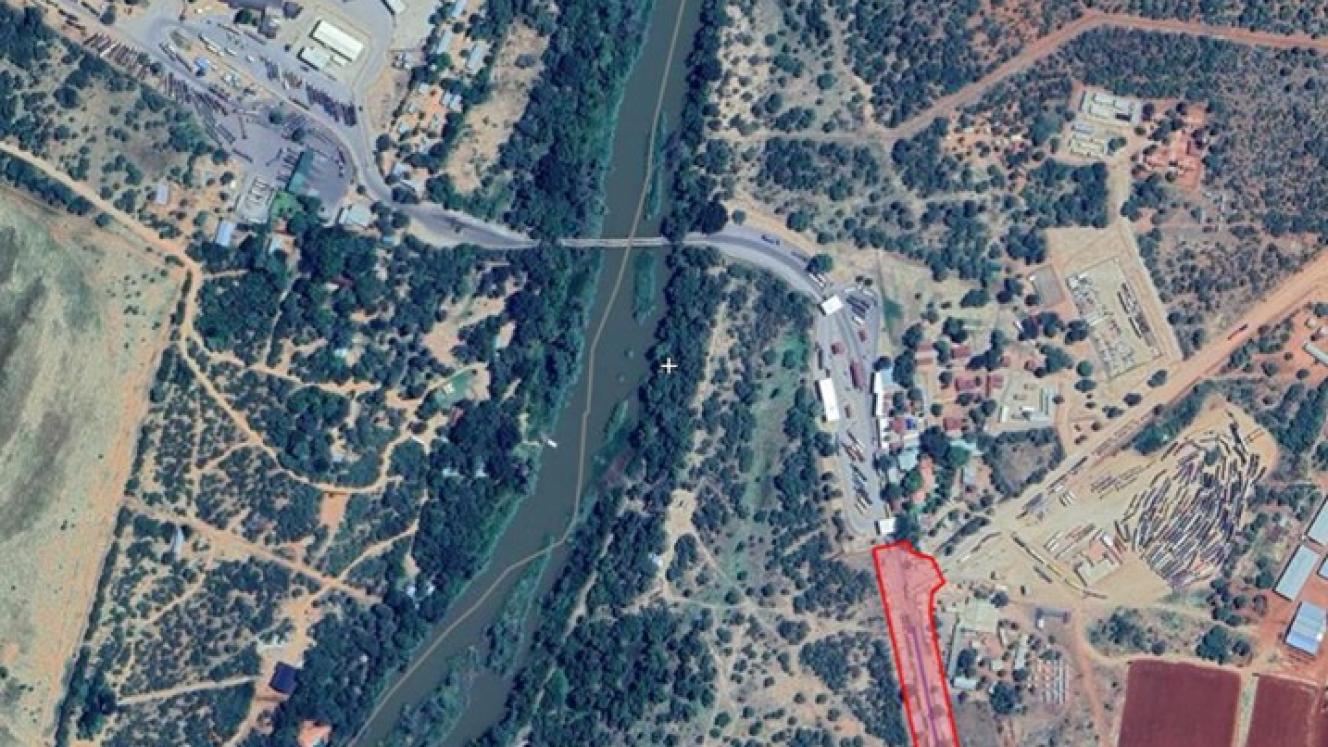
He said the border, which last year closed twice for lengthy periods when the Limpopo burst its banks after heavy rain, could be improved by a flyover bridge above the floodwater line.
Replacing the single-lane bridge towards the Martin’s Drift Border Post in Botswana, is a crucial part of dealing with near-constant bottlenecking at the border, private-sector stakeholders such as Mike Fitzmaurice of the Transit Assistance Bureau has confirmed.
Masiapato said such a project would have to be paid for by a revenue-generating state-owned entity such as the BMA, which is currently hamstrung by a lack of finances to fulfil its mandate.
“There is no money for such a bridge so we will have to look at PPP alternatives to make it happen. But that might entail having a tollgate on such a bridge which, in turn, translates into a non-tariff barrier to trade.”
Speculation about the National Roads Agency Limited (Sanral) having existing plans for a flyover bridge at Groblersbrug has since been dispelled.
Lwando Mahlasela, media relations officer at Sanral, has said: “The bridge in question is not a Sanral asset. Sanral cannot comment on infrastructure developments that fall outside of its jurisdiction” – this being the border control zone at Groblersbrug.