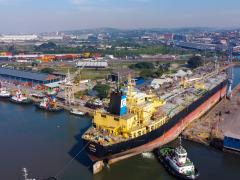
Containerisation is one of the great industrial revolutions of the last century, according to Arnold Garber, chairman of the computer freight system specialists, Compu- Clearing. “It’s quite logical,” he told FTW, “but visionary in its own right. It turned round a whole traditional way of working and carrying sea cargo into a totally new transport concept.” When it started in the 70s it was slow and hesitantly experimental in its uses. But the concept suddenly took hold of shipping minds around the world simultaneously, and, like the internet web, the impetus suddenly became unstoppable. “The initial move had to be to build ships and ports and to adapt landside transport modes and depots and warehouses to handle this new method of cargo packing,” Garber added. “But once this major investment was globally committed, the idea just accelerated. “There were a lot of sceptics, but it worked, and made transport quicker and easier.” At the same time as container systems developed so did computer systems. The two go arm in arm, according to Garber, both offering that “faster, easier, more efficient” benefit. But it didn’t all start like that. The early days were very uncertain and experimental, and the basic computers of the time “creaked and groaned their way to often totally erroneous end results”, Garber added. But the bookkeeping procedures and the accompanying documentation were quickly refined and adjusted to cope, and electronic computer systems went through a geometric progression in their development process. The ultimate advent of the web was explosive, and took the whole computer world into a new dimension. Said Garber: “In next to no time, unless you could say you were fully electronically connected, and knew how to use it, you were out of business. And, although we are talking history, Garber was adamant that we were really referring to extremely short-term history. Containerisation and computer freight systems are now taken for granted. They are considered part of the established, natural world. “But it’s only 30 years old, and in that time it has gone from a new revolution with no certainty of succeeding, into a change of yesteryear. “The point is that many ideas in shipping don’t work out. But this one did.”
‘Containers and electronic solutions have revolutionised the freight world’
Comments | 0
© Now Media. This content is protected by copyright and may not be adapted or republished. If you would like to discuss cooperation opportunities, please contact: editor@freightnews.co.za.