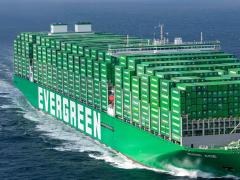
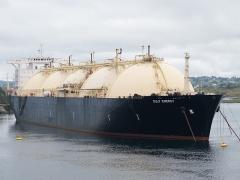
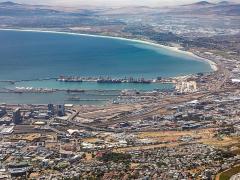
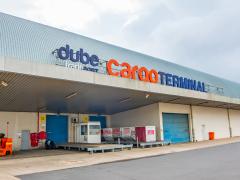
In the past three decades, traditional warehousing has declined – first of all with the start of the almost bus-stop regularity of containerised shipping. But it was the gradual introduction of just-in-time (JIT) techniques – designed to improve the return on investment of a business by reducing in-process inventory – that really swung the change. It promoted the delivery of product directly from the factory to the retail merchant, or from parts manufacturers directly to a large scale factory such as an automobile assembly plant, without the use of warehouses. However, over the same time period, and with the gradual implementation of offshore outsourcing and offshoring, the distance between the manufacturer and the retailer (or the parts manufacturer and the industrial plant) grew considerably. This bred the demand for national or regional warehouses in any specific supply chain for a given range of products. But, despite this evolution, one basic question has remained the same since time immemorial. Does a company have its own warehouse(s); rent space in a third-party owned facility; or contract a large portion of, or a whole warehouse, and third-party operating staff? This means that the warehousing industry comprises three types of premises: public warehousing; private warehousing; and contract warehousing. What is public warehousing? It is a warehouse owned and operated by a thirdparty; charging in particular for type of services used; and mainly for short-term usage. Private warehousing, also known as proprietary warehousing, is operated as a division within a company. It is either on-site (at a central location or dispersed throughout manufacturing facilities) or off-site (satellite facilities located close to marketing areas to store excess on-site inventory and to serve as distribution centre for finished goods). It requires substantial corporate fixed investment in land, building, and equipment. Contract warehousing, on the other hand, is a variation of public warehousing. It is a long-term contract and/or services in a warehouse owned and operated by a third party – offering customised services/ space over a long term. It is also a trade-off between location flexibility (for assured space over the contract period), and a price that is usually lower than standard warehousing rates. Contacts can either be arranged for an entire building or for a defined, fixed portion of square-metre or cubic-metre space.
Consider the benefits
Comments | 0
© Now Media. This content is protected by copyright and may not be adapted or republished. If you would like to discuss cooperation opportunities, please contact: editor@freightnews.co.za.