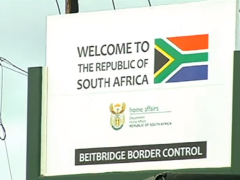
MASERU – You know there’s trouble queuing at a border post when the region’s church leaders rise up in protest. In a meeting in Johannesburg recently, the leadership of the Anglican Church of Southern Africa took note of irksome delays at Lesotho’s border posts, and demanded a meeting with the top leaders of South Africa and Lesotho, including President Jacob Zuma and Lesotho’s long-serving Prime Minister (since 1998) Pakalitha Mosisli, as well as both countries’ foreign ministries and transportation officials. Like road freight hauliers and civilian travellers, the clerics don’t like the lengthy border queues that have become a fixture since the end of the Fifa World Cup. For three months before, during and after the games SA kept is borders open with Lesotho on a 24/7 basis, and the smooth flow of traffic must have seemed heavenly to the church leaders. But those days are over. “The people of Lesotho have since the World Cup suffered greatly at the Lesotho-South African borders due to exceptionally long queues averaging five hours,” the Anglican leadership said in a statement. “This practice is having adverse effects on the lives of people on both sides of the border,” they noted. Commercial road cargo is also slow post-World Cup. Road freight haulers are the commercial and humanitarian lifeline into the landlocked country wholly surrounded by SA. The global recession halved export-dependent Lesotho’s GDP growth rate from 3.9% in 2008 to 1.6% last year. But industrial production was still increasing last year (by 1.5%) instead of declining, and construction projects are widespread throughout greater Maseru, including a new shopping mall downtown. 2010 was ten months old before the first good rains hit the country. The effect on food production from the drought was profound, but the impact on the road infrastructure was mixed. One road freight company owner told FTW, “There was less money spent on road maintenance because of no flash flood wash away, and even the pot holes in town were less. I don’t know if road accidents were down but they were different. Instead of our trucks having accidents because of rain there were bad dust storms and the sands and dirt blew over the highways and made them treacherous.” Food aid continues to constitute large volumes of imports, and with persistent drought this is likely to continue, the World Food Programme’s office in Maseru told FTW. Only 1000th of Lesotho’s land area – 30 sq km out of 30 355 sq km – is irrigated, and only 10% of all land is arable. About 20% of Lesotho’s approximately 7000 km of roads are tarred. For a small country Lesotho has a lot of airports, but only three of them with paved runways. The rest offer the only swift links to the mountainous terrain where road travel is difficult. Air freight goes to even the smallest airstrips, usually comprising emergency food aid and medical supplies.
Clerics join protest against Lesotho border queues
Comments | 0
© Now Media. This content is protected by copyright and may not be adapted or republished. If you would like to discuss cooperation opportunities, please contact: editor@freightnews.co.za.